Kat Albrecht is the founder of Missing Pet Partnership, a national non-profit that specializes in community-based lost pet services and a police officer turned pet detective. She also trains people in the the science of finding missing pets. The Missing Animal Response (pet detective) training course is offered online and is available to anyone residing anywhere. For Lost Pet Prevention Month (hosted by PetHub), she shared stories and advice from her work as a pet detective. You can read part II here.
- What should pet owners do in terms of missing pet prevention?
There is not much that can be done to prevent a pet from becoming lost, because they become lost in so many ways. The majority of people who lose a pet never expected it to happen to them. Incidents range from animals being involved in roll-over car crashes where the dog or cat is ejected from the vehicle and runs away in fear, to escaping out an open gate or door, escaping from a pet sitter, digging out or jumping over a fence, or jumping off a balcony.
What is critical is that all pet owners protect their pets so that if their pet goes missing they can increase the chances that it will be recovered. The two primary methods are microchipping your pet and having it wear a collar with ID tags. And if your pet is microchipped it is critical that you make certain that it is also registered.
Owning a microchipped pet is like owning a vehicle with a license plate—the only way that the license plate of that car will be connected to you is after you register it with the department of motor vehicles. If you are not sure whether your pet’s microchip is registered, ask your veterinarian’s office to help you find out. They can scan your pet’s microchip, contact that microchip company, and verify that the chip is registered with all of your contact information.
- What tips do you have to offer people who are missing a pet?
First and foremost, don’t panic—there are people and information out there that can help you. There are plenty of lost and found websites where you can post your lost pet’s information, including http://www.helpinglostpets.com/ which offers many features for pet owners. There are many states that have community-based lost and found Facebook pages like those created byhttp://lostdogsofamerica.org/.
There are free-behavior based tips along with videos on Missing Pet Partnership’s website at www.missingpetpartnership.org. MPP also maintains a pet detective directory where you can find a listing of training professionals and volunteers willing to assist you.
Dogs and cats are like apples and oranges—they behave differently when lost. The methods that we suggest that you use to search for a missing dog are very different from the ones we suggest that you use for a missing outdoor-access cat and a “displaced” indoor-only cat that has escaped outside.
The most important tip that I can give is that you should not lose hope and that you should not give up the search for your missing pet. We’ve been able to help recover missing dogs and cats weeks, months, and in a few cases, years after it went missing. The moment that an owner stops searching for their missing dog or cat, the chances that it will be reunited with that owner plummet.
 |
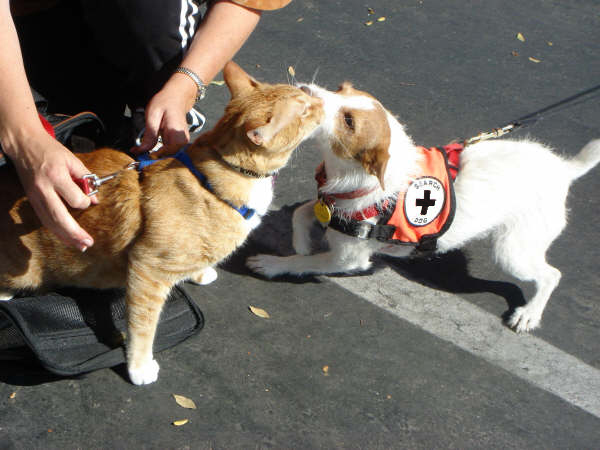
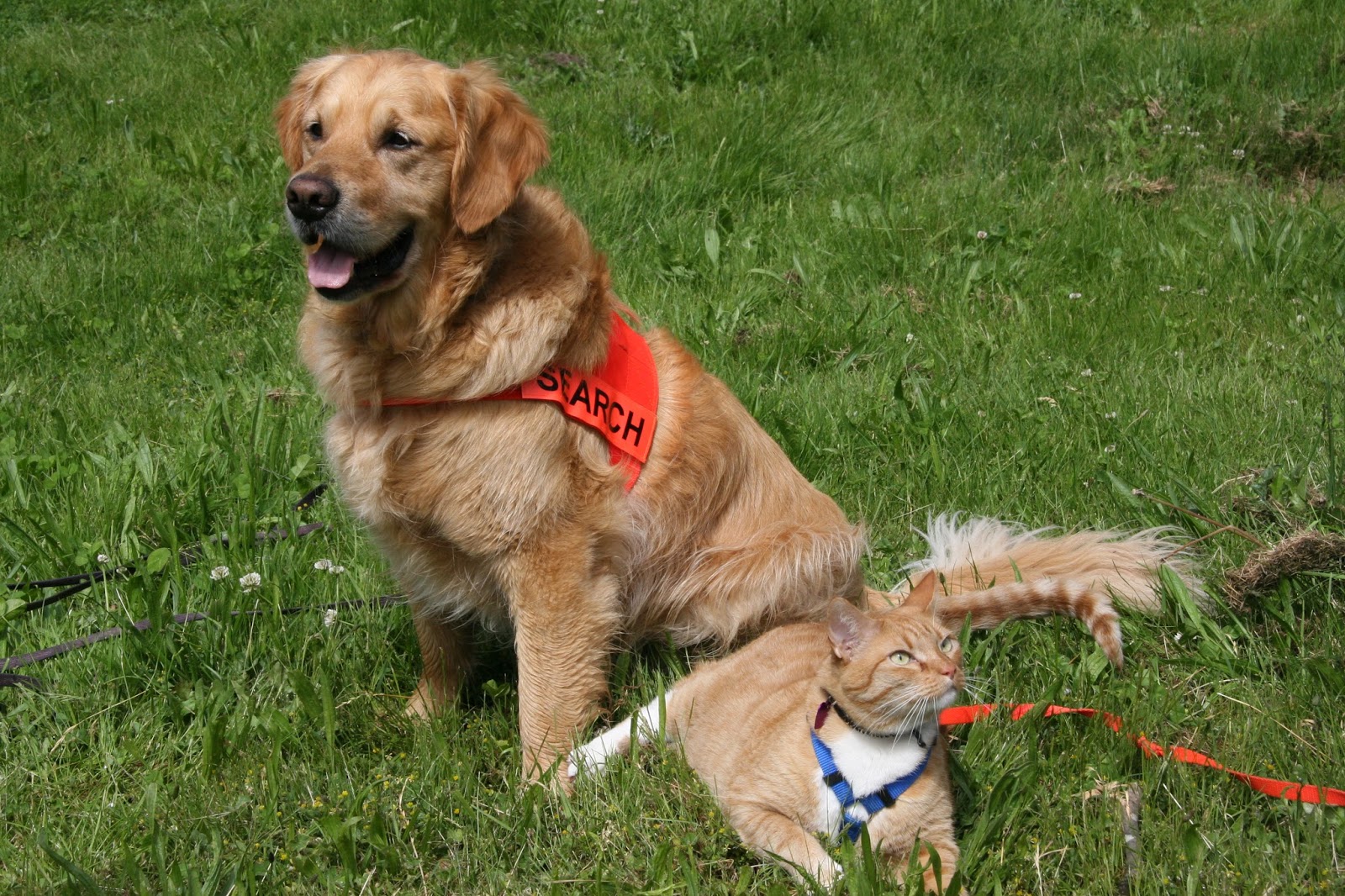
| Only cats with bold, gregarious temperaments that are fearless around dogs and that are trained to crate quietly are used for Target Cat work. |
- What are misconceptions that people have about the pet finding process?
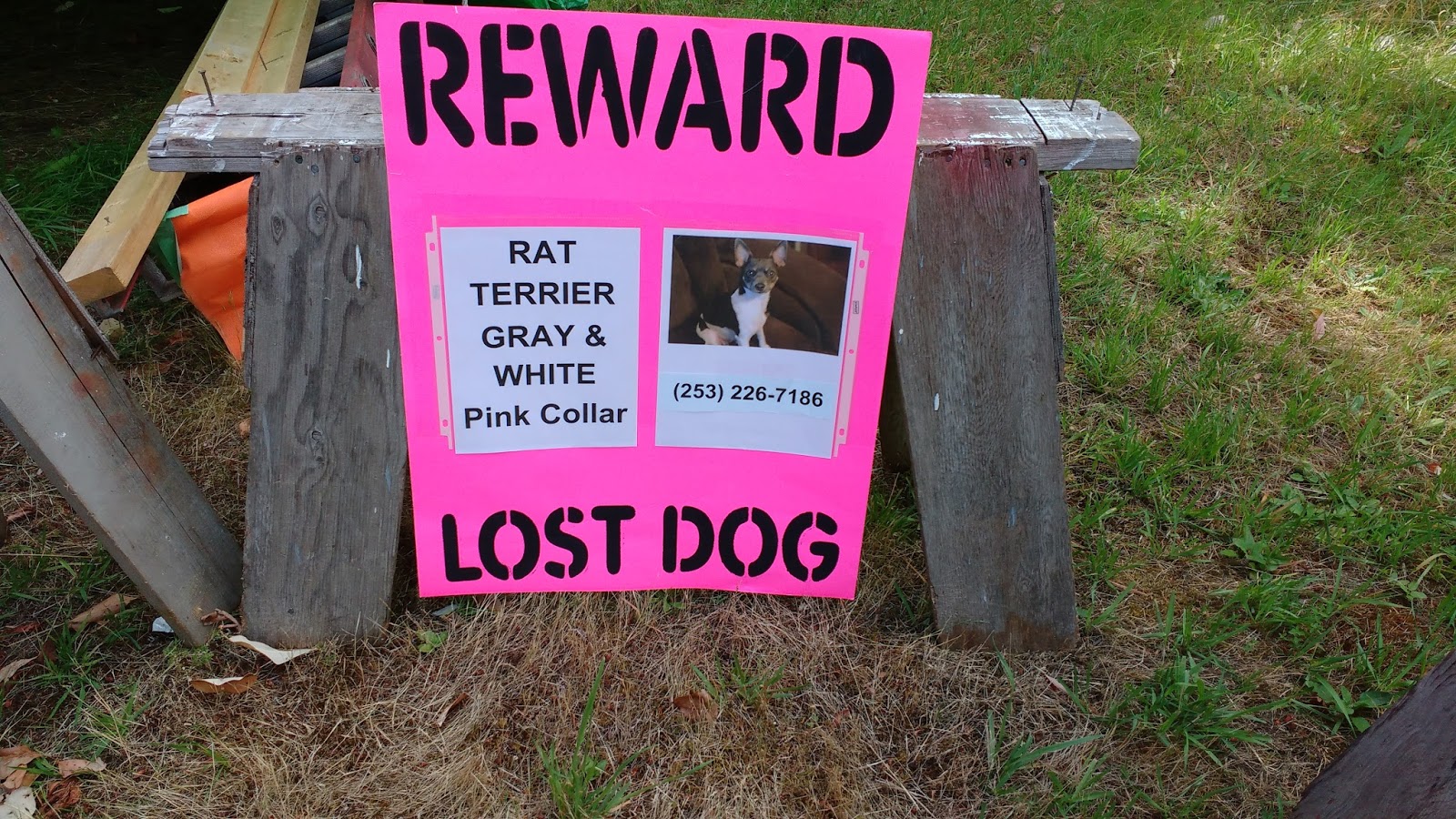
One major misconception is that hanging out small, white flyers is the best way to find a missing pet. Most pet owners try that and then give up when no one calls with a sighting of the pet. In some cases, that is because the person who found the missing pet has simply not noticed the small white flyers.
In other cases like when an indoor-only cat escapes outside, the cat is actually hiding in silence near the escape point and no one will ever see the cat because it will only sneak out of hiding in the middle of the night.
Another misconception is that most cats that go missing in an area where there are coyotes were likely eaten by a coyote. While this certainly does happen on occasion, more cats are actually killed in animal shelters (where they are euthanized because no owner came to search for them) than are ever killed by coyotes. That is because cat owners who believe that their cat was killed by a coyote won’t even bother driving down to the shelter to look for their cat—why would they if in their mind their cat is already dead?
A misconception about lost dogs is that they will come running to their owner when called. While this is certainly true of many dogs with friendly temperaments, many dogs that are timid or shy will become panicked with the process of escaping and they will run from anyone who calls them, looks at them, walks towards them, or pays any attention to them, including their owner.
 |
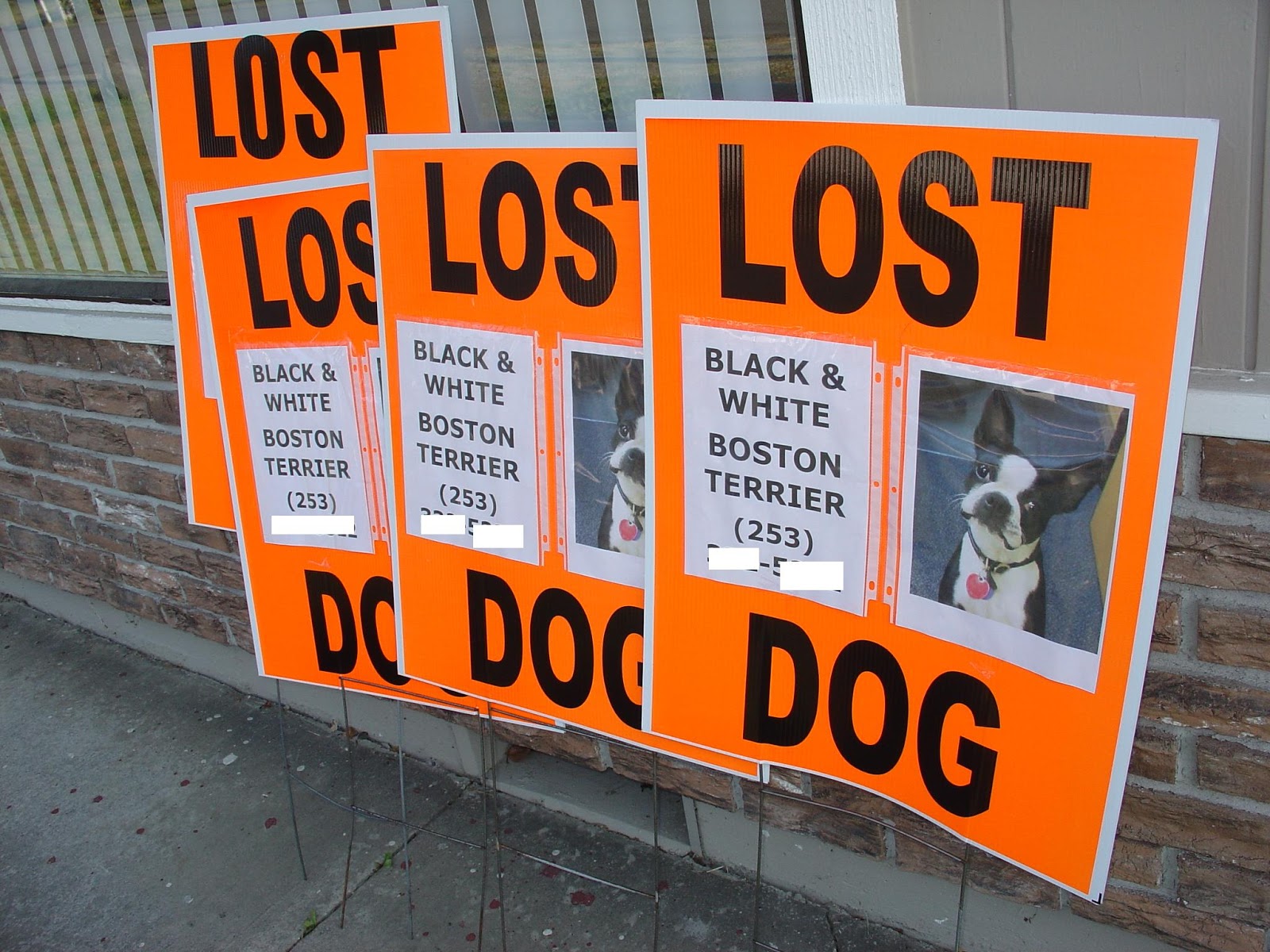
| Attention getting lost dog flyer. |
- Why should people consider hiring a pet detective?
Pet owners should definitely consider hiring a pet detective if they are not physically able to put in the amount of work (and time) that needs to be done to recover a lost pets. The people who fail to do all of the work that is required have a reduced chance of recovering their missing pet. There are only so many hours in the day and if you work a full-time job, the chances are that you need someone to help you in your search efforts.
There are many things that have to be done to properly search for a missing dog or cat, including creating effective lost pet posters, notifying all of your neighbors, conducting a physical search of the neighborhood, checking the shelter cages, posting your pet on lost and found pages, placing ads on Craigslist, and following up on all leads.
If you have the time and you are physically able to do all of this work on your own, you still should ask for help from friends, family, or even from volunteers from a lost and found Facebook page in your community. Many of these groups offer to put up posters for you, follow up on leads, and even help with setting up feeding stations, wildlife cameras, and humane dog traps if your dog is skittish and running from people.
Although many of these groups are all-volunteer, these people work hard to help get dogs back home and many don’t even ask for donations. Whether you hire a paid professional or utilize the services of a volunteer group, you really would benefit from receiving advice from someone who has been trained in lost pet recovery work.
- If people want to hire a pet detective, how can they tell if they are reputable?
The number of “pet detectives” out there who’re offering lost pet recovery services across North America is growing rapidly. While there are several pet detectives who are very good and quite reputable, there are also a few bad apples out there who really should not be in business.
Currently there is no governing body within the pet detective industry and anyone can hang out their “shingle” without any previous training for either themselves or for their search dog. However, Missing Pet Partnership is working to change this. We’re preparing to launch a membership program that will include MAR (missing animal response) training and certification for both volunteer and professional pet detectives, strict training and impartial certification requirements for MAR (missing animal response) search dogs, advanced training courses, a code of conduct, a code of ethics, monthly training webinars, regional seminars, and regional dog training “boot camps” across the US and Canada.
Our National Pet Detective Directory currently only lists people who’ve taken between forty to sixty hours of classroom training and who’re in good standing. To determine whether someone is reputable, you can check Missing Pet Partnership’s Testimonials “Praise for Our Pet Detectives” page to see whether people have posted a good word about the pet detective in questions
http://www.missingpetpartnership.org/testimonials/praise-for-our-pet-detectives/.
Another way to check whether or not someone is reputable is to ask them for references and be sure to contact those references. You can also check that person’s business name under Yelp to see whether there is a pattern of complaints.
One other test is to ask them how long they believe that scent survives. Missing Pet Partnership has a page “How Long Can Scent Survive?”
http://www.missingpetpartnership.org/lost-pet-help/find-a-pet-detective/how-long-can-scent-survive/ that explains that some so-called pet detectives are claiming their search dogs can track a scent trail that is several months old (one even claims his dogs can track a scent that is one year old!) and yet the oldest documented scent trail that police bloodhounds tracked was just 13 days old.
Search dogs are a great tool if they are available in your area, however, there are limitations on their use. Pet detectives who make claims about their professionalism while bashing other pet detectives (especially all volunteer pet detectives) and who try to convince you that their search dog is THE answer to finding your lost pet should be treated with suspicion.
 |
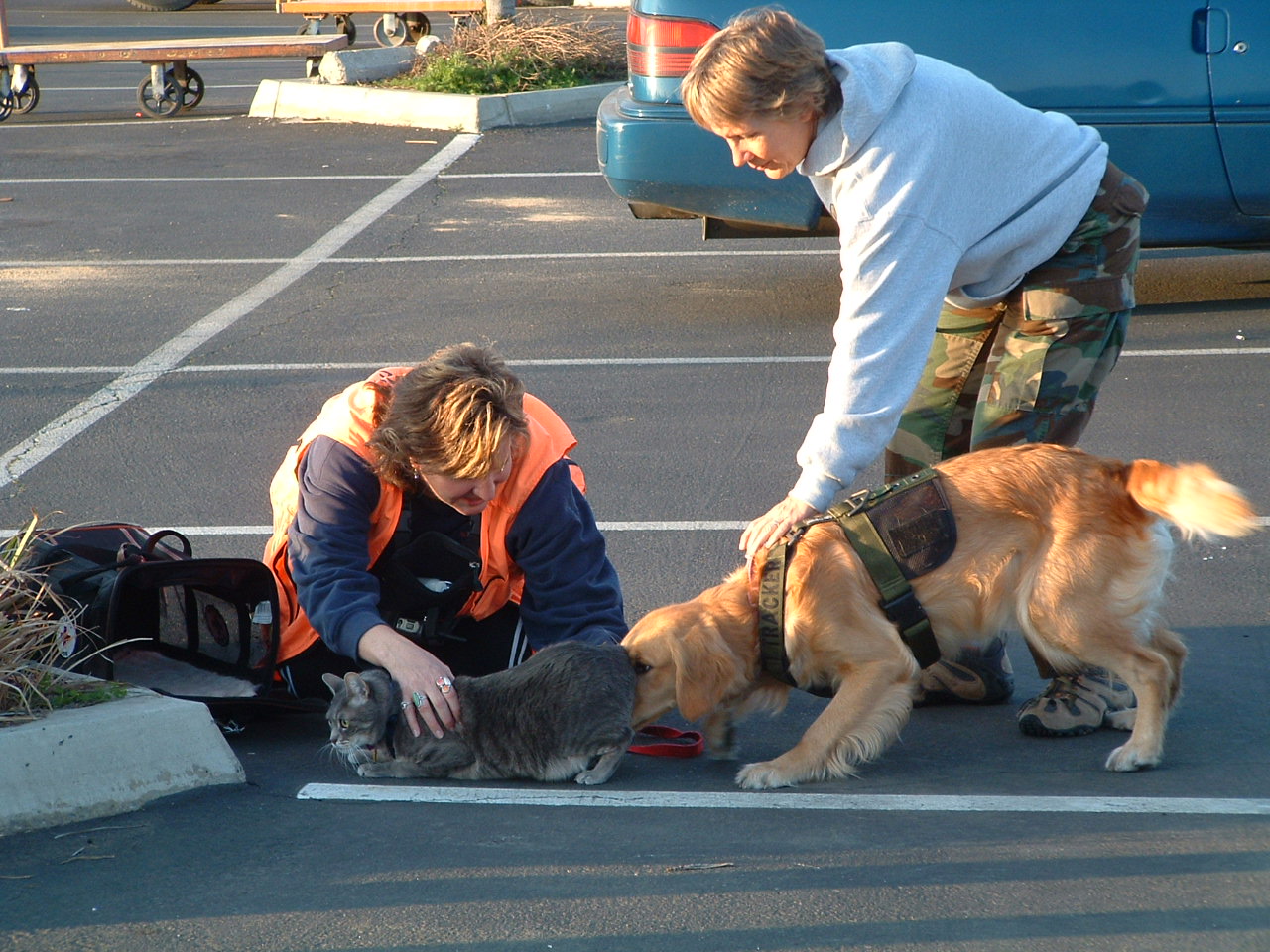
| Trainer Kat Albrecht explains that this bloodhound failed his evaluation for Cat Detection work due to a lack of excitement towards the crated target cat (that was in the black bag). |
- How is finding missing pets different from finding missing people?
Finding missing pets is very different from finding missing
people in two major ways: the level of community support and the search tactics that are used. When a child or an Alzehimer’s patient is lost, a highly trained search-and-rescue team is dispatched to conduct a high profile search of the area. This team typically includes a few paid staff (law enforcement officers) members and many volunteers.
There are often volunteers who specialize in conducting ground searches where they look for physical clues, searchers who use air scenting search dogs and attempt to pick up the airborne scent of the missing person, searchers with trailing dogs that attempt to track the scent trail of the missing person, horse “posse” team members who use horses to quickly search trails for the missing person, and other teams like fixed wing aircraft and helicopter crews. Most of these missing person searches end up in the news because they just don’t happen all that often.
In addition, only trained searchers, who are managed by a team using the Incident Command System, are authorized to participate in these searches. The tactics and techniques that are used in these searches come from years of research into the analysis of lost person behavior and best industry practices for search-and-rescue teams. Search managers don’t send searchers out into the woods to wander aimlessly—there is an organized, structured search plan and everyone involved knows how to operate under this much needed coordination and authority.
In contrast, the search for missing pets is like the wild, wild west! Community support is limited to those who post on social media pages like Lost and Found Facebook pages. Most other people in the community are unaware of or ambivalent towards a missing dog or cat. And if the dog or cat owner fails to use proper marketing techniques to get the word out that their pet is missing, most people within the immediate search area just never get the message that the pet is missing.
A growing trend with lost and found Facebook pages is to post information about lost dogs and then to post sightings and ask for people to “help.” The problem is that the majority of the people offering to help have not been trained in how to lure a panicked dog. In spite of posters and warnings that people should not call or chase the dog, many well-meaning people do just that—they call the dog’s name, slap their legs or clap their hands, causing the dog to bolt and run away!
Sadly, this has resulted in many missing dogs that have been chased into traffic or chased out of a search area where a team was trying to calm the dog and lure it to enter a trap. Missing Pet Partnership has a page that details panicked pet behaviors and includes a YouTube video
http://www.missingpetpartnership.org/recovery-tips/panicked-pets/ of how NOT to call a loose dog but instead how to use “calming signals” to attract a panicked dog.
 |
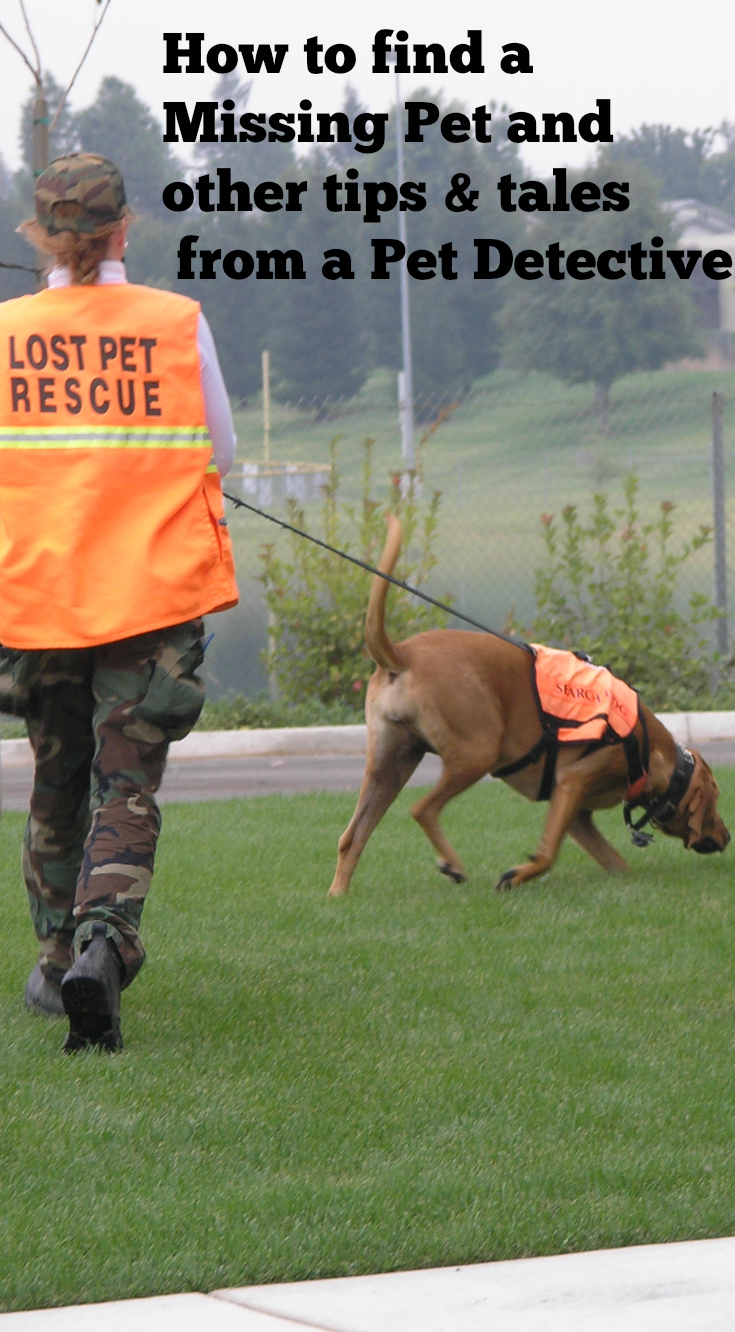
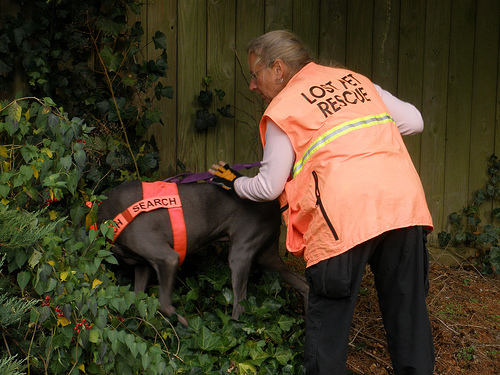
MAR Cat Detection dog Sadie checks heavy brush for a missing cat.
*All photos are the property of Kat Albrecht.
** We are participating in PetHub's 2nd Lost Pet Prevention Month. This post was sponsored by PetHub. They are not responsible for the contents of this article.
|