Showing posts with label Dog Training. Show all posts

06 February 2017

My Five Favorite Positive Training Tools for Dogs

Tools are an essential part of life and dog training especially when your dog has figured out how to use items as tools. These are some of my favorite positive training tools that serve to keep Mr. N's Pinky and the Brain tendencies in check.

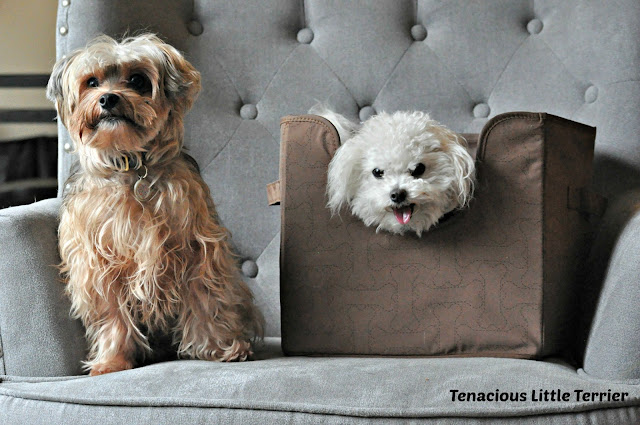
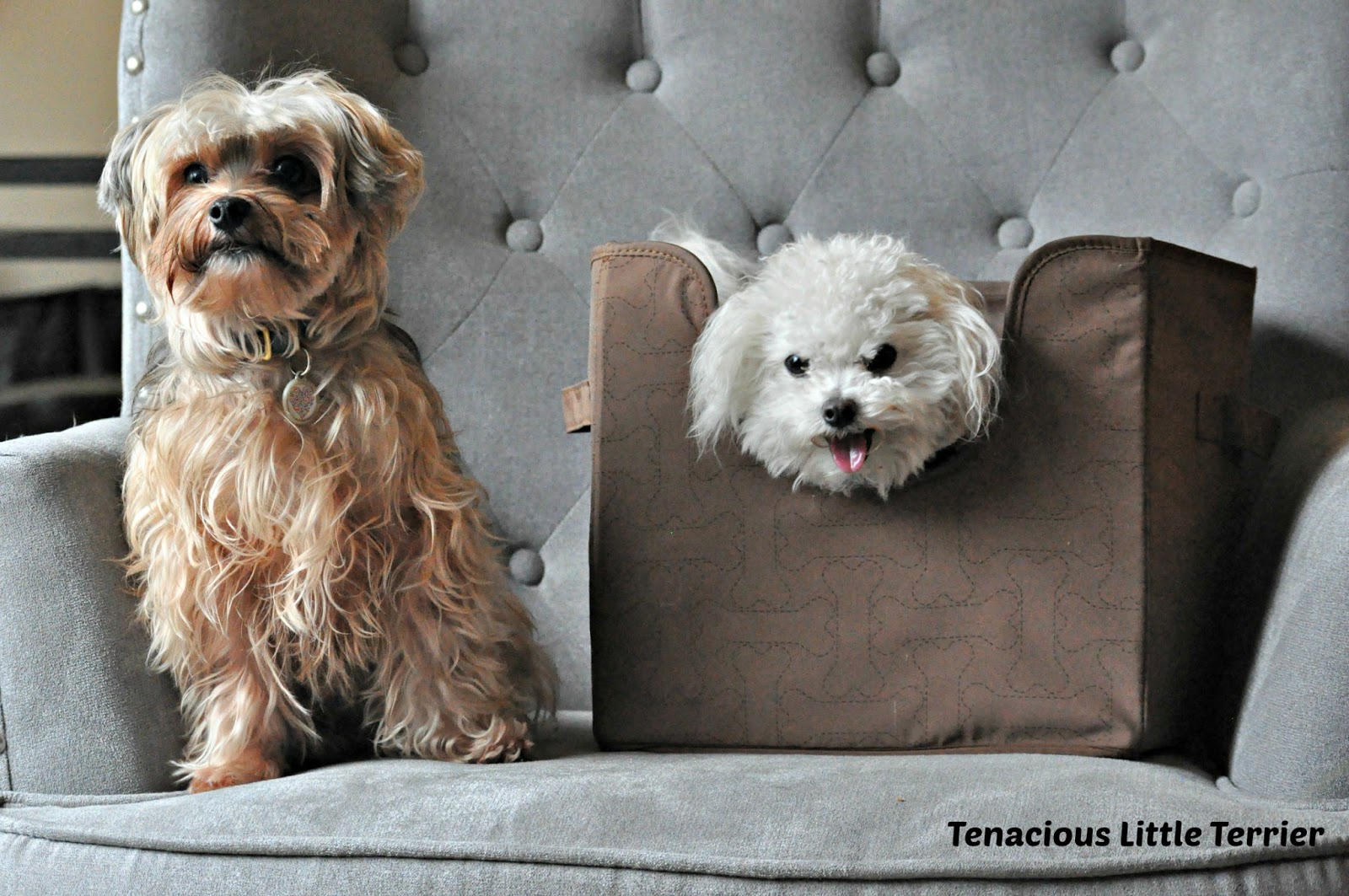
Can you guess who is Pinky and who is The Brain?
Clicker
I do have a marker word (yes) but the clicker is more precise and sharp so 99 percent of new training starts with a clicker in our house. Clicker training makes clear to the dog when he is right and is especially helpful for behavior chains and more advanced tricks when timing is essential. I favor the Starmark clicker although we have various clickers strewn throughout the house so I usually just use the first one I find.

Mat
We were prescribed Dr. Karen Overall's relaxation protocol by Mr. N's veterinary behaviorist for his separation anxiety. It's been an uphill road but he is slowly starting to learn how to relax on cue.  He even fled to his mat to get away from the puppy we were watching. He does have a good off-switch but sometimes I really need him to settle down and the mat is helping with that. Memory foam bath mats are comfortable, easy to wash and stay cleaner due to the backing.

Treats
I don't work for free and I don't expect Mr. N to either. His "salary" consists of a rotation of high-value meaty treats or cheese. He would prefer to be paid in live squirrels or the freedom to romp around off-leash all the time but as those things are not always possible, treats it is. Treats affirm that yes, he is a good boy. Yes, he made the right choice. And thank you for stepping away from that dead fish and not rolling on it. String cheese and bits of leftover meat make him happy as does Ziwipeak, Real Meat, and Cloudstar treats from the pet store.

Long line
When I first started training recall, I used a long line. I don't really have a fenced area to work with and if Mr. N didn't come back, I would have a way to catch him. His recall has much improved since then and I hardly use it except for at the beach sometimes but during that initial training stage, it was essential. Biothane lines are great as they are waterproof, less prone to tangle and easy to clean.

Food Puzzle Toys
Puzzle toys for dogs are pretty much the canine version of TV for toddlers. Sometimes they're driving you crazy being like what's for dinner? Can we go for an outing? When you really need to get some work done. That's when you pull out the puzzle toy for some peace and quiet (depending on how boisterous your dog is). The dogs benefit too by exercising their brains. Kongs and the Kong Wobbler are a favorite around here as are Nina Ottosson toys.

What are your favorite training tools?

*If you buy from the Amazon links listed on this blog, we will get a few pennies that go towards running the blog and Mr. N's treat allowance!

Welcome to First Monday's Positive Pet Training Blog Hop hosted by Tenacious Little Terrier, Travels with Barley and Wag 'n Woof Pets . Say hello to our new co-hosts! Please share your responsible pet owner positive pet training tips by linking a blog post or leaving a comment below.  Our theme for this month is favorite training tools but any positive reinforcement training posts or comments are also always welcome. The Positive Pet Training Blog Hop goes all week long. Our next hop will begin March 6th and continues for a week. 

13 January 2017

My Dog Training Inspiration or Ode to Fenzi Dog Sports Academy

I stumbled across Fenzi Dog Sports Academy classes on an online forum. I thought it would be good for Mr. N to take an impulse control class and I couldn't find an in-person class that fit with my schedule, budget and would take him. 

It's amazing how many of the local classes refuse to take reactive dogs in any of their "normal" classes (outside of the classes meant specifically for reactive dogs). I looked at various classes including recall, agility and tricks and he wasn't allowed in any of them. At this point, Mr. N has progressed to where he can go to classes without reacting as long as the other dogs are under control but it was difficult finding classes at the time.


Fenzi is an online dog sports academy that teaches a variety of different classes including agility, obedience, nose work, freestyle, disc and pet manners. They offer different levels (gold, silver, bronze) depending on whether you have a working spot (with feedback) or auditing. 
They also offer scholarships for people who need them. 

The instructors post weekly lectures and the gold students post videos of their dogs doing the assignments and the instructors offer feedback. Gold and silver students can ask questions on the forums. 

Mr. N has taken various classes including nosework, shaping, Bogeyman (dealing with reactivity) and skills for little dogs. All of their classes are taught with positive training methods. What drew me the most to Fenzi was their ethos. 

"We do not believe that “purely positive” exists, so we do not use that term. At the same time, we do not believe that compulsion is needed in either the training or proofing phases of dog sport preparation. All of our courses are taught in a manner that respects the well being and emotional comfort of both halves of the team - not just the handler.  We do not teach pain compliance techniques in our courses."


I've always trained in a positive fashion but the Fenzi philosophy made me really think deeply about Mr. N's emotional comfort as well. Is it fair to him? Is he comfortable? There are always things he will not like but I believe it's important to help him cope with the things that are inevitable (fireworks, the vet) and not put him in situations that he shouldn't have to cope with.


We've quit several different classes because a trainer would keep picking him up when he clearly did not want to be, he would repeatedly be charged by off-leash dogs in the classroom and was clearly set up for training failure by flooding. Fenzi gave me the conviction and awareness to say no, this is not fair to my dog. This is not fair to me. I'm leaving. 


We dabble in dog sports but I take classes mostly because I want Mr. N to be the best dog he can be. And because we enjoy it. When I ask Mr. N if he wants to train, he eagerly runs to our training spot. Training is one of the highlights of his day. More than any training mechanics (although those too), Fenzi has taught me that relationship is paramount. I'm going to their dog sports camp (Ferretpalooza) this summer and I'm already making up a list of sessions I want to attend. 


Our friends at Dash Kitten told us that when writing their kindness post, they were inspired by Mr. N when it came to writing about dog training. 


"The happy whizzing tail of a pup going at top speed when its owner is kind, and gives praise for a training session that has gone well."

That is what I strive for.


Welcome to First Monday's Positive Pet Training Blog Hop hosted by Tenacious Little Terrier and Rubicon Days. Please share your responsible pet owner positive pet training tips by linking a blog post or leaving a comment below.  Our theme for this month is training inspiration or training mentor but any positive reinforcement training posts or comments are also always welcome. The Positive Pet Training Blog Hop goes all week long. Our next hop will begin February 6th and continues for a week. 
09 December 2016

The Gift of Positive Training with a Veterinary Behaviorist

There was a little dog. And he had a little curl right in the middle of his forehead. When he was good, he was very, very good. And when he was bad, he was horrid.


Mr. N is very, very good most of the time. It's that one percent that trips him up. His main "bad" fault is that he is leash reactive to other dogs and will bark and pull and lunge out of excitement. He's improved a lot over the years and we can go to trials and classes and shows and pet expos with some careful management.

Walks in close proximity and the dogs in our complex are still a challenge. We manage encounters as best as we can but occasionally corners or other things will trip us up. But it's mostly just embarrassing. Because people look at him like he's a yappy little untrained dog. And me as an irresponsible owner. And you want to proclaim that you have put hours and hours of training into that dog and he has titles and ribbons even if he has trouble walking past another dog calmly.

The other issue is separation anxiety. That is definitely rooted in fear. He spent the first few years of his life locked up in a crate almost non-stop so I don't blame him. And I wish there was a way to tell him that I will come back to him. That I will always come back. But fear of abandonment always lurks in his little doggy brain.

He's progressed from barking almost non-stop while I'm gone to intermittent barking in between watching the window and napping. I don't think anything will make him happy about me leaving. But it would be nice if he was at least tolerant of the prospect.


So for this Christmas (and possibly the next three Christmases considering the cost), he's getting a very intangible present. I'm going to take him to a veterinary behaviorist in the new year. Veterinary behaviorists are veterinarians who specialize in treating behavior. They have to do additional training (through a residency or mentorship), write case reports, pass an exam and author a research project. In addition to behavioral modification, they also have the ability to prescribe medication. Kind of like dog psychiatrists (they do treat other animals like cats, birds, horses etc).

I've been debating doing it for quite a while. I would have done it sooner but it is not a cheap commitment. Also Mr. N's behavioral issues are not severe. He's not living in his life in utter terror and fear or biting anyone or destroying the roof over his head. In which case, we would have found a way to take him in sooner.

But in the end, I do think it will improve his quality of life and hopefully speed up the rate at which he's improving. Helping him become more comfortable staying home alone would be a boon. And I'm hopeful that one day, we'll be able to walk past the neighbors' dogs without him throwing a fit. I don't think he's going to be excited about his gift but I hope it will be worth it.

Don't forget to enter to win a positive dog training package (puzzle toys, treats, trick book)!

a Rafflecopter giveaway
Welcome to First Monday's Positive Pet Training Blog Hop hosted by Tenacious Little Terrier and Rubicon Days. Please share your responsible pet owner positive pet training tips by linking a blog post or leaving a comment below.  Our theme for this month is my the gift of positive training but any positive reinforcement training posts or comments are also always welcome. The Positive Pet Training Blog Hop goes all week long. Our next hop will begin January 2nd and continues for a week. 

11 November 2016

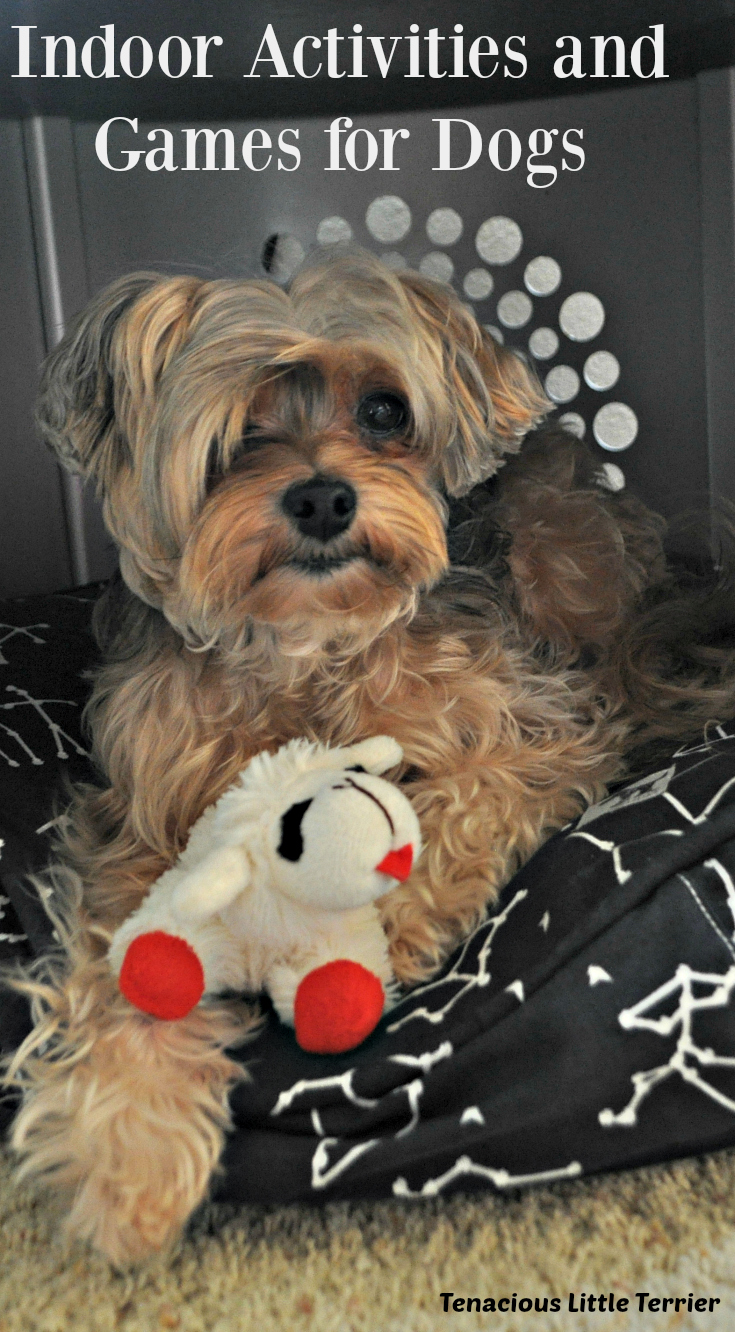
Indoor Activities and Games for Dogs


When the weather outside is frightful and you (or your dog) don't want to venture outdoors but they're still looking at you expectantly, what do you do? It's going to be a long winter if you leave them to their own devices. And shorter days mean fewer good walking hours. Luckily, there's plenty of ways to stimulate their brains and bodies indoors.
  • Nosework games. You can scatter food around the house for your dog to find or work on finding various odors. There are nosework kits for sale online or you could work with scents you have at home like essential oils (preferably ones you don't use often as to not confuse the dog). 
  • Impulse control. Work on a good leave it around food. Train your dog to run to a mat or their crate when guests come over. Have them do a sit stay and wait for a release before throwing a toy.
  • Tricks. Tricks are a great way to exercise your dog's brain. If you want to get fancy, you could work on behavior chains where your dog learns how to string together a series of cues into one big trick (cleaning up toys for example). 
  • Refine old tricks. Work on duration, distance or distractions. Can your dog perform roll over while bacon is frying? 
  • Indoor fetch. This works best if you have small or gentle dogs who won't go running into furniture and knocking things over. I recommend using soft toys or balls for this purpose.
  • Help with the chores. They can turn on/off light switches, close doors, put laundry in the machine or throw trash away in the trash can. And if your dog is brave in the face of temptation, you can have them fetch you a beer after your house is sparkling clean.
  • Work on a behavioral issue. Practice loose leash walking in the house or staying out of the kitchen or staying calm while you leave (for dogs with separation anxiety). 
  • Puzzle Games. There are now a score of different puzzle games on the market. Or you can make simple puzzles at home using a plastic bottle and putting food in it or using a muffin tin and tennis balls. 
  • Compete for a title. These days, you can earn a virtual title in almost every dog sport (rally, obedience, parkour, agility, freestyle, disc etc). 
  • Relax and Settle. Games are all good and fun but at the end of the day, your dog has to know how to settle. You can't play with them 24/7! Dr. Karen Overall has a good protocol for teaching relaxation to dogs. 
Which indoor games and activities do you enjoy with your dog?

12 September 2016

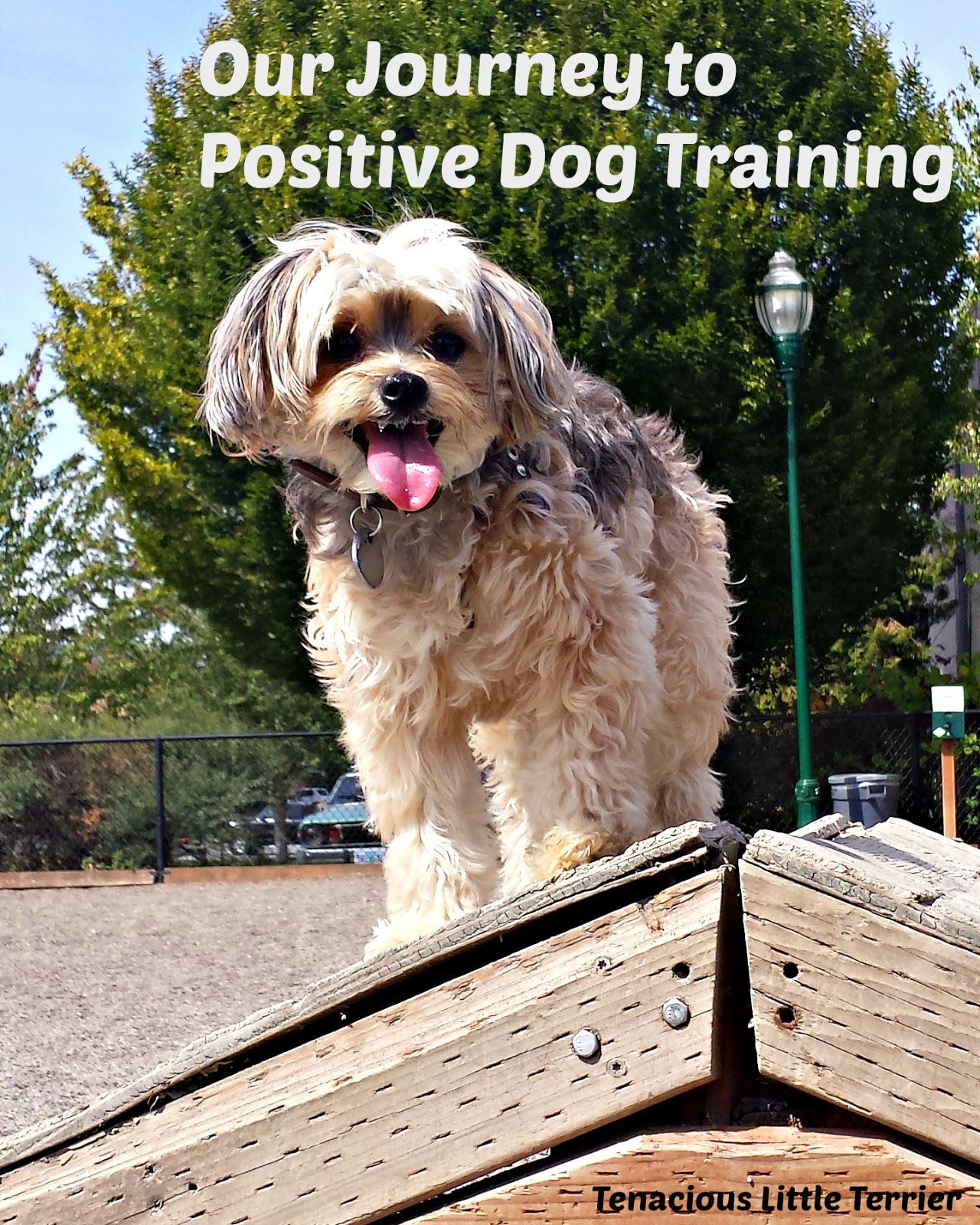
Positive Dog Training Reaps Rewards, Love, and Happiness

I often refer to Mr. N as my "guinea pig" dog because he is my first dog and he gets the brunt of my training mistakes. One mistake I'm glad I've never made though is using aversives to train. I've always trained him positively from the beginning.

I didn't really have a training philosophy when we first got him. Nor was I really aware of different training philosophies or tools. I just knew that I didn't agree with using corporal punishment as a learning tool for children or for dogs and I wanted my relationship with my dog to be one based on trust and affection and not fear.


Maybe it's because he's generally well-behaved or because he's tiny but no one has ever suggested I use a prong or shock collar on him or alpha roll him either. Although one woman did suggest debarking him when I mentioned he had separation anxiety...

Mr. N has a really soft temperament. I've never even raised my voice at him and yelling at him might break his tiny little heart. I yelled at the screen once during a soccer match and ever since then he has been super wary of us watching soccer. Using force on him would be pointless and unnecessary. 

Portland has numerous positive reinforcement classes (unlike many other places) so I didn't have any trouble finding positive-based training classes. Mr. N has taken a couple of training classes (basic manners, a reactivity one and some sports workshops) but the bulk of his training I have done myself using various books and DVDs and Youtube videos. I also take classes through Fenzi Dog Sports Academy which is online, positive-based and has classes for almost every dog training issue or sport. 

He gets rewarded for good behavior and making good decisions. We use his preferred reward medium (mostly food and some life rewards like chasing squirrels and going for walks, we're slowly trying to add play into the mix). He does not believe in this working solely for praise thing. He is pretty biddable but he is a terrier and he wants a good reason to work! 

I try to set him up so he doesn't fail. And when he does something he's not supposed to, he gets redirected or removed from the situation or misses out on the fun.

And all this creates a dog who wants to work with you. After a few minutes of acclimation at the park, he decided to ignore the squirrels and the birds and the kids and we worked on his latest trick. We did a few repetitions working in the new distracting environment and then as a reward, we went off to go chase some squirrels. 


How did your journey to positive training begin?

Welcome to First Monday's Positive Pet Training Blog Hop hosted by Tenacious Little Terrier and Rubicon Days. Please share your responsible pet owner positive pet training tips by linking a blog post or leaving a comment below.  Our theme for this month is my positive training journey but any positive reinforcement training posts or comments are also always welcome. The Positive Pet Training Blog Hop goes all week long. Our next hop will begin October 3rd and continues for a week. 

15 July 2016

Tricks You Won't Teach Your Dog

The one trick I will never teach Mr. N is "limp." It always drives me into a tizzy whenever I see him limping (usually because he has something caught in his paw). And someone has already learned that limping means attention. He started fake limping once in class when he felt like I wasn't paying attention to him. I don't need more unnecessary panic in my life.

I've heard of conformation people not teaching "sit," people with long-backed dogs not teaching "sit pretty," not teaching "play dead" because it's too morbid and big dog people not teaching rebound and back stalls because really do you want a 70-pound dog trying to bounce off your stomach?

A trick I do want to teach him that a lot of people refuse to teach is "speak." He alerts barks and play barks but he's not one of those dogs that is enthralled with the sound of their own voice or alerts to every falling leaf. And he will generally shush when I tell him to so I'm not worried that I'm going to create a barking monster.

You can't make me bark when I don't want to.
But when I actually want him to bark, he refuses. I sometimes think that he thinks it's rude to bark without a good reason. I've tried everything I can think of. I've played animal noises on Youtube to see if he will react. I've made various high-pitched noises at him. I've teased him with a treat and refused to give it to him to see if he will bark out of frustration (he thinks it's very rude and will go away and turn his back to me).

I fake knocked at the door and had other people try it as well. A trainer suggested that method when I told him about it. I told him Mr. N can distinguish between real knocking at the door and fake knocking and doesn't react to the fake noise. I don't think the trainer believed me. He tried knocking where Mr. N couldn't see and Mr. N was not impressed.

Nada. If anyone has any brilliant ideas, I'm all ears.

What do you refuse to teach your dog? And why?

05 July 2016

What to Know if You're Bringing Your Dog to #BlogPaws, Pet Expos and Other Dog-Friendly Events

Know thy dog. Are they non-aggressive, well-behaved, and able to handle crowds, loud noises and constant stimulation? If so, they're ready to attend dog-friendly events like BlogPaws, pet expos and other dog-friendly events. If not, maybe next year and in the meantime they can await the goodies you'll be bringing back.

We recently came back from a trip to Arizona to attend BlogPaws, a multi-day conference where people and pets mingle. It is a high octane environment with multiple distractions in the form of people, other animals, food and toys.

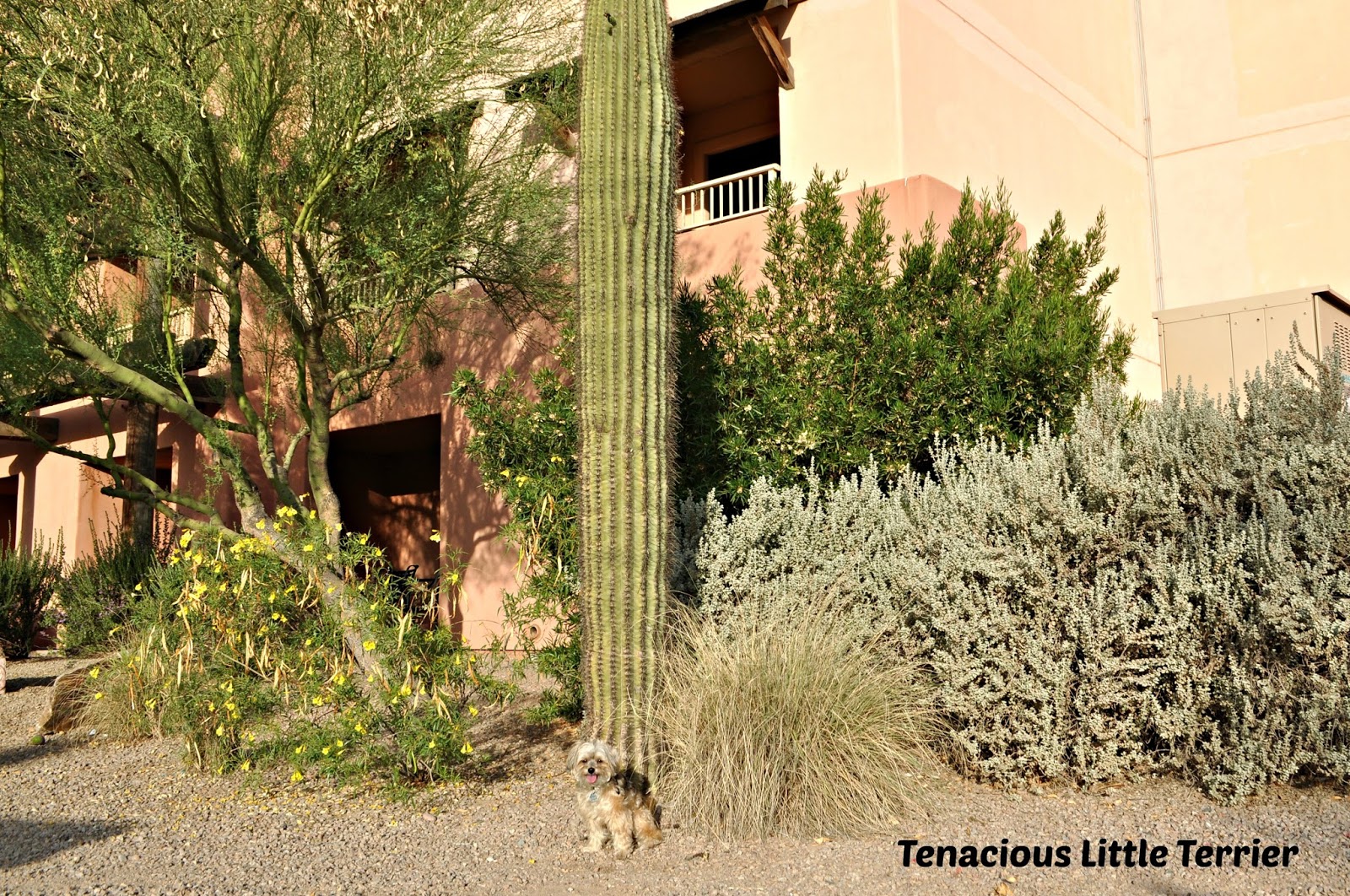
Mr. N exploring in front of our hotel
I was impressed with how the majority of the animal attendees behaved in such a setting but we had a couple of incidents where I was seriously concerned for Mr. N's safety. Mr. N was charged at and almost knocked over multiple times because the owners were not paying attention to their dogs.  I know we were not the only ones who had issues.

Dogs that attend these events should be:
  • Healthy. Do they have a strong immune system to combat being with numerous other dogs and the potential for infectious viruses, bacteria and parasites and up-to-date on shots? 
  • Good with other animals. Dogs make up the majority (of various shapes and sizes and colors) of animals at BlogPaws but there are also cats, rodents and ferrets. 
  • Well-socialized. Can they handle other dogs barking, loud music, people talking on microphones, applause, and small children? This is not the place to expose your dog to multiple new things for the first time. 
  • Trained. Do they have a strong leave it, good leash manners, and the ability to settle quietly for long stretches of time? 
  • Under control. Are they on a short leash or confined to a carrier or a stroller? More and more dog events are banning flexi leashes and I applaud that decision. Crowds and flexis do not mix.
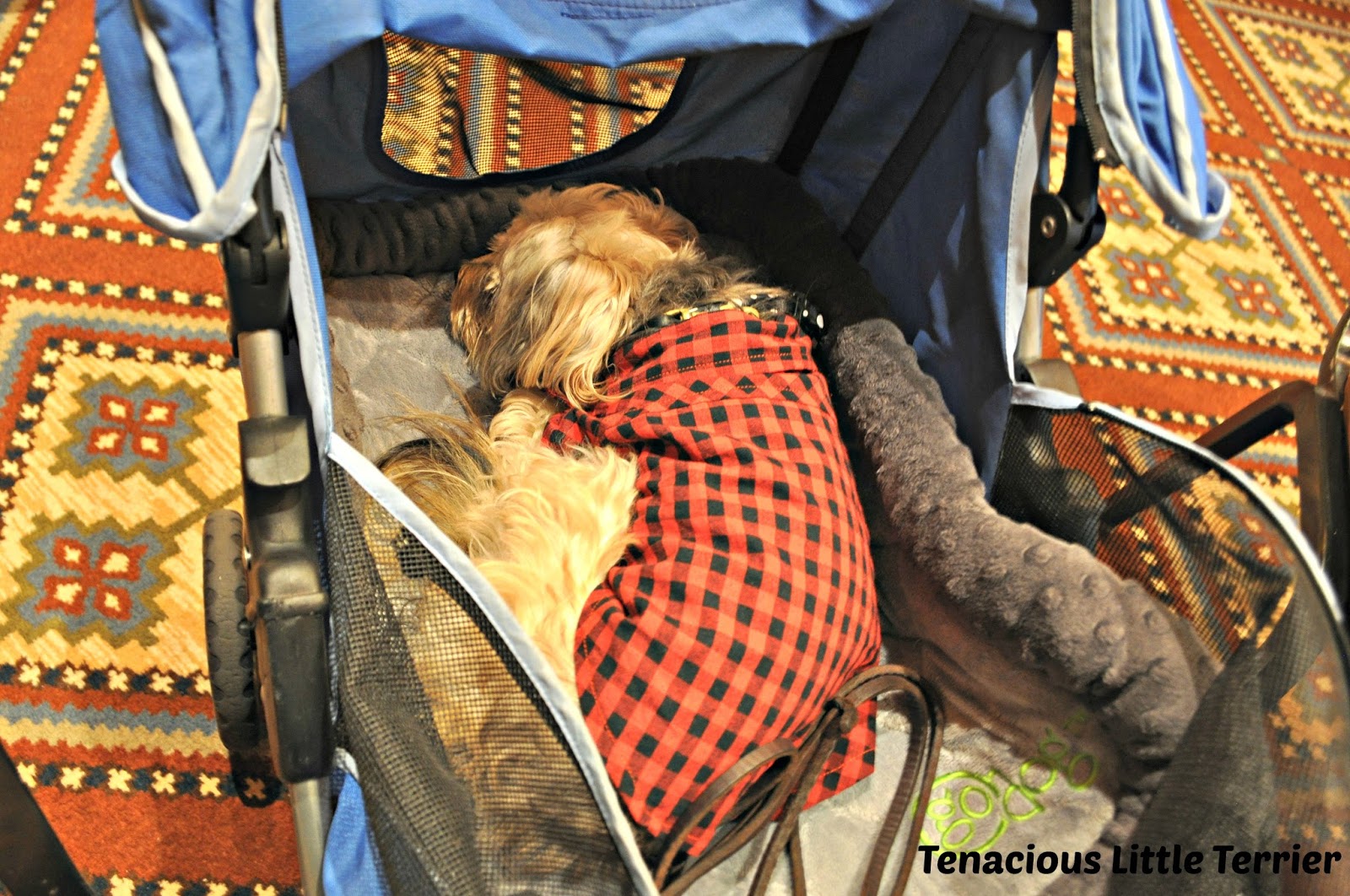
Mr. N napping quietly in his stroller during a session.
Bringing dogs to events is fun but also comes with a weighty responsibility. Are they having fun? Are they preventing other people or dogs from having fun? It's your job to make sure your dog is having a good time as well as not stopping other people/dogs from having a good time. 
  • Watch your dog for signs of stress. They include but are not limited to panting, yawning, whale eye (showing the whites of their eyes), pinned back ears, refusal of food, tense body posture. 
  • Make sure to give them breaks. Sit out a session and go walk them around. Have them take a nap in a quiet area. Take them out to go to the bathroom. 
  • If they're being a distraction, remove them. If your dog is whining or barking for a prolonged period or otherwise being distracting, time for a break! 
  • Don't let your dogs be rude. Don't let your dogs charge up to other animals or sniff them for long stretches. If you see your dog fixating and staring at another dog or one of the other animals, redirect them and give the other animals a wide berth. 
  • If something happens, apologize profusely. Dogs are dogs and things happen. People will be much more forgiving if you apologize and take steps to ensure it doesn't happen again.
Mr. N decided he needed a nap
There are an abundance of cute fuzzy dogs (and other animals) at these events. It can be hard because you feel like you know these dogs already and just want to hug them already but they don't know you and would much rather be approached in a slower fashion. If you're bringing your dog, ask people to keep the following in mind when they approach your dog.

How to approach strange dogs:
  • Don't disturb dogs that are eating, sleeping or in a confined area (crate/stroller/carrier). 
  • Ask permission before petting. 
  • Don't loom over the dog. 
  • Don't reach over their heads to pet them. 
  • Don't lean in really close to their face. 
  • Dogs generally do not like hugs. At all. Especially from strangers. 
  • Stand still and wait for the dog to approach you.
Mr. N with Ann from Pawsitively Pets. He is happy to be petted and sit in laps if you follow the above!
Do you have any tips for bringing your dog to a dog-friendly event and making it a good experience?

Welcome to First Monday's Positive Pet Training Blog Hop hosted by Tenacious Little Terrier and Rubicon Days. Please share your responsible pet owner positive pet training tips by linking a blog post or leaving a comment below.  Our theme for this month is wildcard (whatever you want). but any positive reinforcement training posts or comments are also always welcome. The Positive Pet Training Blog Hop goes all week long. Our next hop will begin Monday, August 1st, and continues for a week.

20 June 2016

Generalizing Dog Behavior and Tricks with #Sojos

I usually ask Mr. N to perform some tricks during spare moments while we're out and about. Mr. N often does tricks for people on store counters, while we're waiting in line, and in the middle of walks.
Generalizing (responding to cues in environments different from the one that it was learned in) can be hard for dogs so doing this exposes Mr. N to practicing his tricks in a variety of settings and among different distractions. Your dog may sit in the living room but not outdoors in a park with squirrels which is why we're always practicing to build up fluency and improve on the three D's (distractions, duration and distance).


The tricks we practice tend to be ones without props and those that can be done in tiny spaces while being mostly stationary.  Due to Mr. N's compact size, space is not a huge concern but for bigger dogs, you don't want them knocking into things and people. Some of the tricks that we practice:

  • Touch
  • High five/shake/fist bump variants
  • Take a bow
  • Cover your eyes
  • Sit/down/stand
  • Are you sad (down with head on the ground)?
  • Cross your paws
  • Wave
  • Lick your nose

Mr. N believes that work well done should be rewarded appropriately and he has strict standards for what an appropriate reward should be. I took him to the pet store and out of the treats the employees offered him, he rejected half, spat out 1/4 and ate 1/4. The other dogs in the store were happy to eat his rejects. 


I like to make sure the treats I am giving him are healthy so if I have to adjust his food intake due to a lot of training that day, he's not filling up on junk. We only have so many calories a day to work with and raw food is not the easiest to use for training.

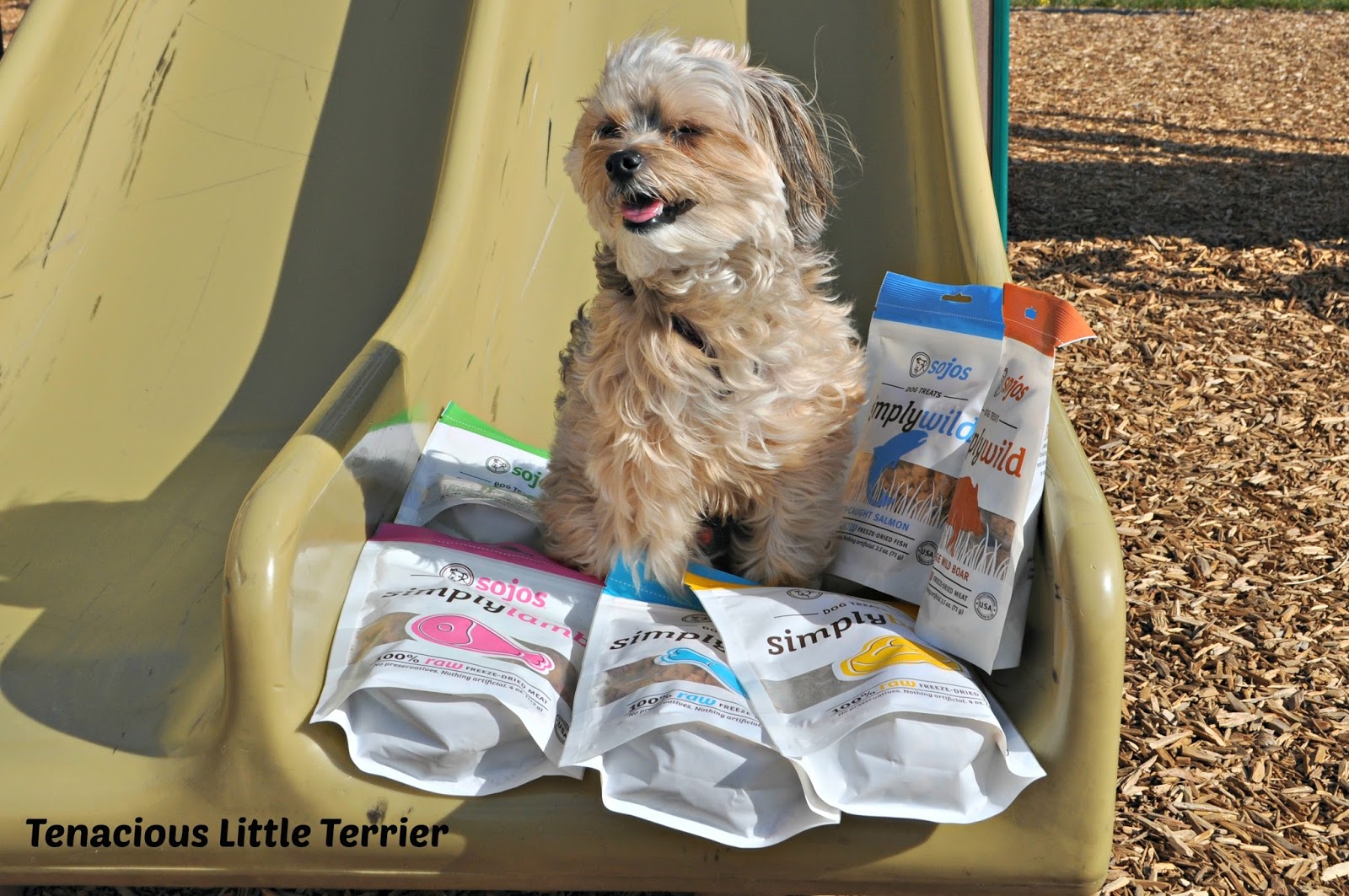
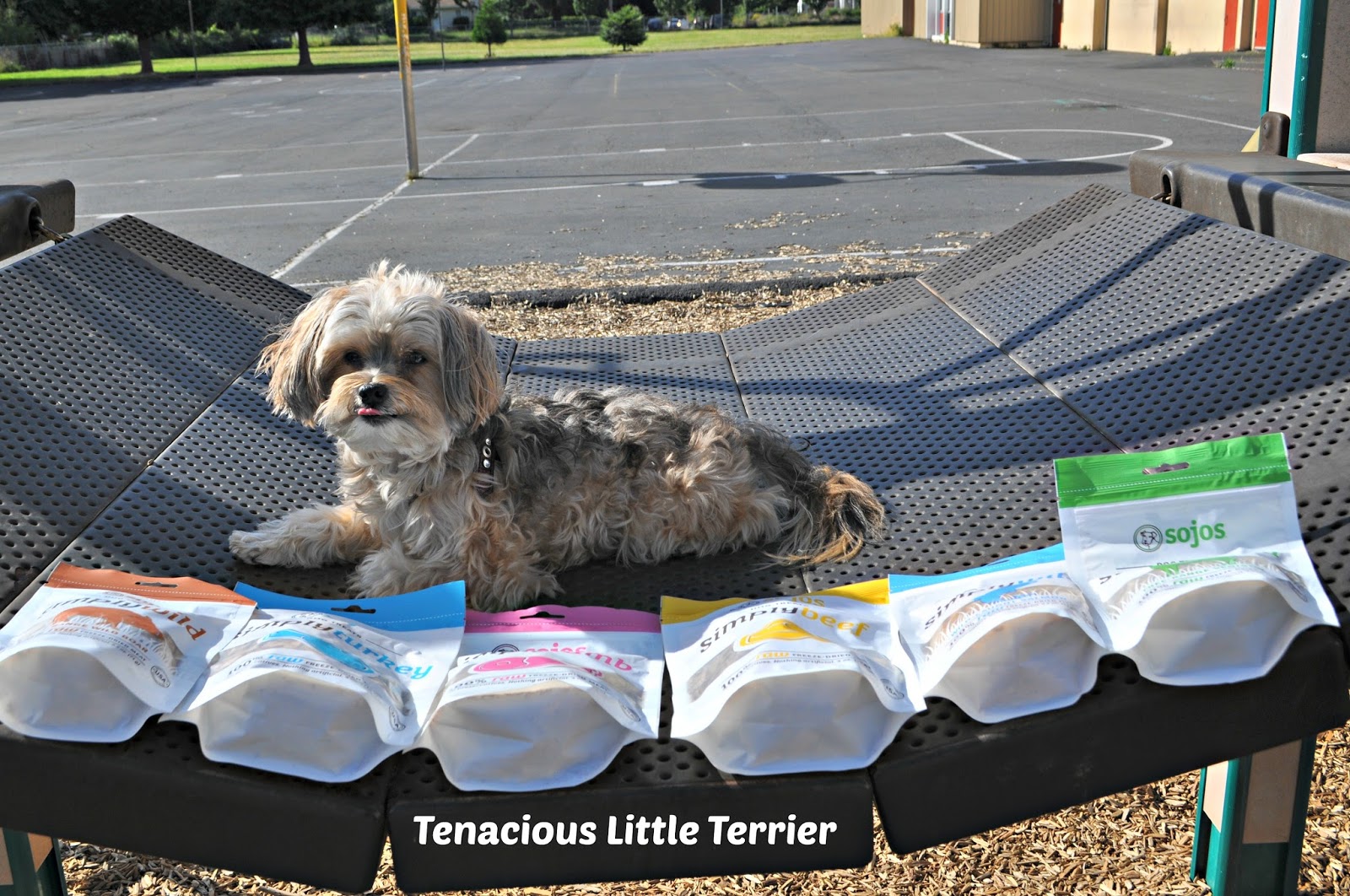
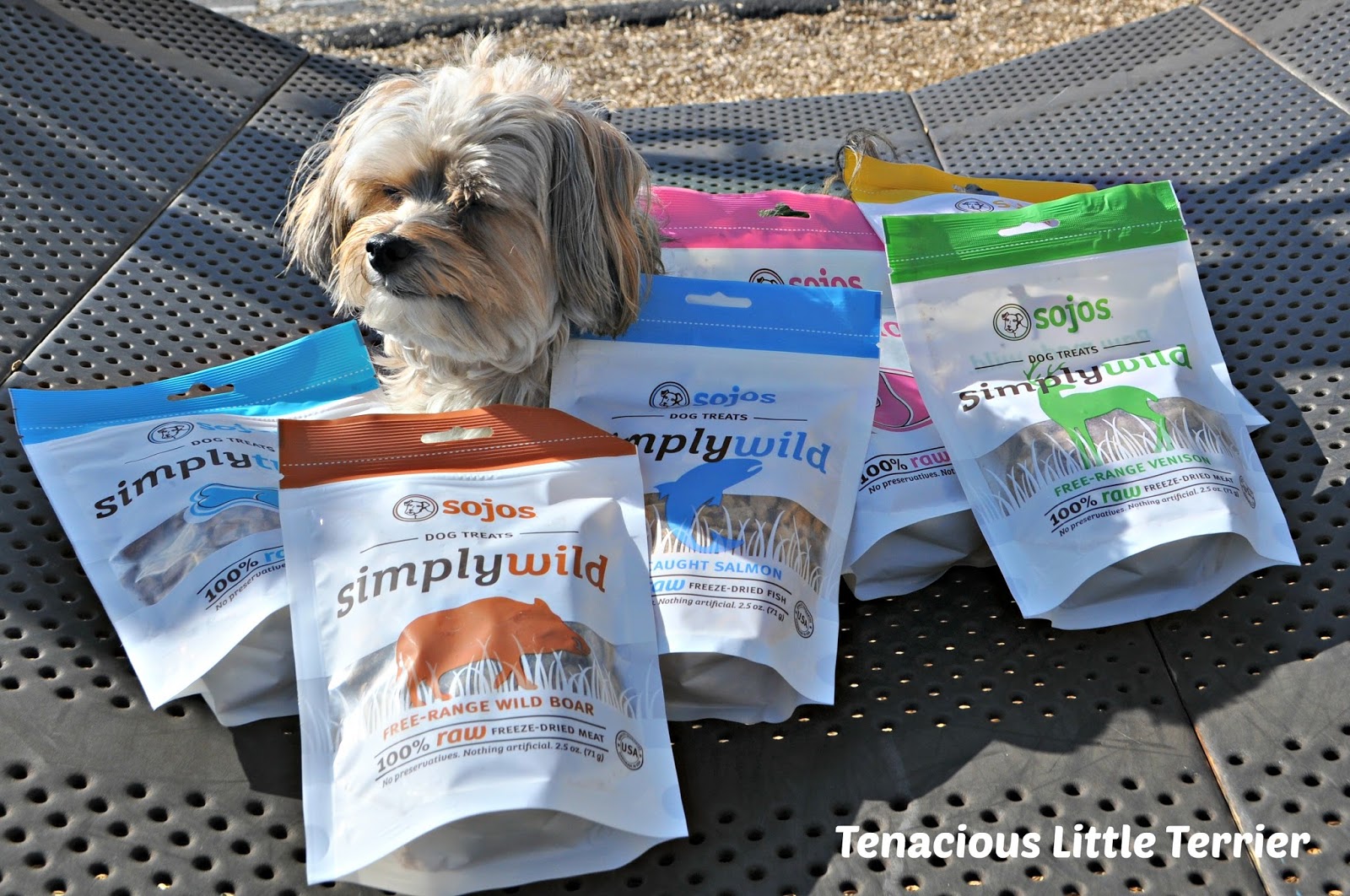
We like Sojos treats because they are single-ingredient protein treats, easy to stick in my purse and carry it around, and meet Mr. N's exacting standards. He likes raw food and people food the best of course but these run a close second. And they fare much better in my purse for long periods. Like all freeze-dried treats, there tends to be some crumbling. I save the crumbs and toss them in with Mr. N's regular food as a topper. They come in a number of  different proteins too which is nice for dogs with allergies and for variety's sake.


We are doing a giveaway for Sojos treats for two lucky winners. What sorts of tricks or behaviors will you be practicing with your dog?

This post was sponsored by Sojos. They are not responsible for the contents of this article. All opinions expressed are our own. 

06 June 2016

Personal Play with Your Dog

I usually use food or life rewards as motivation for Mr. N. I've been slowly trying to use more toys as rewards (usually paired with food) and we've also been working on our personal play skills (play without toys or food). Denise Fenzi's play class can't get here soon enough. 

Apparently Mr. N has taken this lesson to heart. He woke me up from a nap to play "wrestle bitey face" and this is a dog that loves napping as much as I do! As Mr. N has a considerable size disadvantage, he uses his full body in play while I use one hand to bat him around. 

Emphasis on the bitey face. 
He also likes playing chase. We take turns being the chaser and chasee. There are differing opinions on whether chasing your dog in play will hamper their recall but Mr. N is so super velcro anyway that he will circle back and check in with me if I'm too far behind. 

Run, run as fast as you can. You can't catch me!
We will also occasionally play spider hand where I creep my hand on the floor and he chases it down. 

What kind of personal play games do you play with your dog?

Welcome to First Monday's Positive Pet Training Blog Hop hosted by Cascadian Nomads, Tenacious Little Terrier and Rubicon Days. Please share your responsible pet owner positive pet training tips by linking a blog post or leaving a comment below.  Our theme for this month is reporting back on trying new training games and play. but any positive reinforcement training posts or comments are also always welcome. The Positive Pet Training Blog Hop goes all week long. Our next hop will begin  Tuesday, July 5th because of the holiday and continues for a week. 

18 May 2016

Teaching Children Dog Safety and Dog Bite Prevention (National Dog Bite Prevention Week)


The majority of children who meet Mr. N have no idea whatsoever how to greet dogs properly. They run up to him yelling "puppy" at the top of their lungs or grab at his face or want to pick him up or hug him. All of these can be risky behaviors around dogs, especially strange ones. 

Children are the most common victims of dog bites and more likely to be severely injured. According to the American Veterinary Medical Association, every year, more than 800,000 Americans receive medical attention for dog bites. And at least half of them are children. 

Dog safety for children is a big component of the work that Mr. N's therapy dog group does. When we do therapy visits at domestic violence shelters and schools, we also educate children on how to greet dogs properly, dog body language and bite prevention.
Mr. N in his therapy group uniform
We have the kids practice dog greetings on a stuffed animal before approaching the dogs. We teach them to:
  • Always ask the owner for permission.
  • Approach slowly and from a side angle.
  • Don't lean/loom over the dog. The small dogs in Mr. N's therapy group greet the children on ottomans so they are more at a level with the kids.
  • Pet gently in the direction of the fur growth.
  • Don't pet dogs on the head.
  • Do NOT hug the dogs. Hugging is a primate behavior, not a canine one!
Dogs who want attention have soft, relaxed body language and faces and will approach you and solicit petting. Mr. N will shove his head under your hand if he wants to be petted. If they don't, they may show signs like lip licking, turning their head away, yawning, scratching or the more obvious growling and snapping.

We talk about different dogs' tells. Mr. N has a very obvious one. His tail curls up over his back normally but when he's stressed, his tail goes straight down towards the floor (we call it "sad tail").


The dogs also get a designated "safe space" during therapy sessions in which to retreat if they need a breather. Mr. N has a fabric x-pen. We tell the children that when the dogs are in their special place, they need time to themselves and should be left alone.

We emphasize that dogs are not toys. They do not enjoy kisses, dress up, being ridden like a horse, or being picked up precariously. Unlike toys, they have feelings. They don't like when they're teased, yelled at or being bothered when they're eating.

77 percent of dog bites come from the family dog or a friend's dog. Mr. N was the demo dog for a dog safety class where one of the participants was a little boy who had been bitten by a dog at a friend's party. If he knew then what he knows now, he could have avoided that bite. If your children are aware of dog safety, it could save everyone a lot of pain and heartache!


Sources:
https://drsophiayin.com/blog/entry/preventing-dog-bites-by-learning-to-greet-dogs-properly/
http://eileenanddogs.com/2012/08/29/does-your-dog-really-want-to-be-petted/
http://stopthe77.com/
https://www.avma.org/public/Pages/Dog-Bite-Prevention.aspx

We're participating in a blogger collaboration for National Dog Bite Prevention Week. Check out these other blogs for our week-long series about dog (and cat) bites.
Fidose of Reality (Monday)
Random Felines (Tuesday)
Miss Molly Says (Thursday)
Savannah’s Paw Tracks (Friday)

04 May 2016

You Can Teach an "Old" Dog New Tricks!

I'm very proud of my little dog. He has come a long way. I refer to Mr. N as my guinea pig dog as he is my first dog and he gets the brunt of all of my training trial and errors. He wasn't the easiest dog for a beginner (separation anxiety, frustration-based reactivity, prey drive) but I'd still pick him all over again.

This past month, Mr. N has:
  • Seen a squirrel running twenty feet away, looked at it and made a conscious choice to stay with me off-leash.
  • Walked in a pet fashion show with my friend's kid in front of other dogs and llamas while waiting in line with cats, dogs and a bird.
  • Made progress with his separation anxiety. He will bark for a few minutes when I first leave and then settle down for the vast majority of the time I'm at work.
  • Learned the beginning of a "hold" through shaping. We're up to ten seconds in duration.
  • Attended several training classes in which he has not reacted to a single dog. Our trainer told us that he was one of the calmest dogs in class that day... never thought I'd hear those words!
He is very proud of himself too!

02 May 2016

Improving Play Drive with a Food Stuffable Toy

Despite a toy box full of toys, Mr. N only plays with them for a five or ten-minute spurt each day. His play drive is definitely not high enough for toys to be a reliable reward. He prefers food and the smugness of being right. I've been working with him to make toys more appealing. He has a special stuffed squirrel he only gets as a reward and a fur tug to appeal to his terrier instincts.

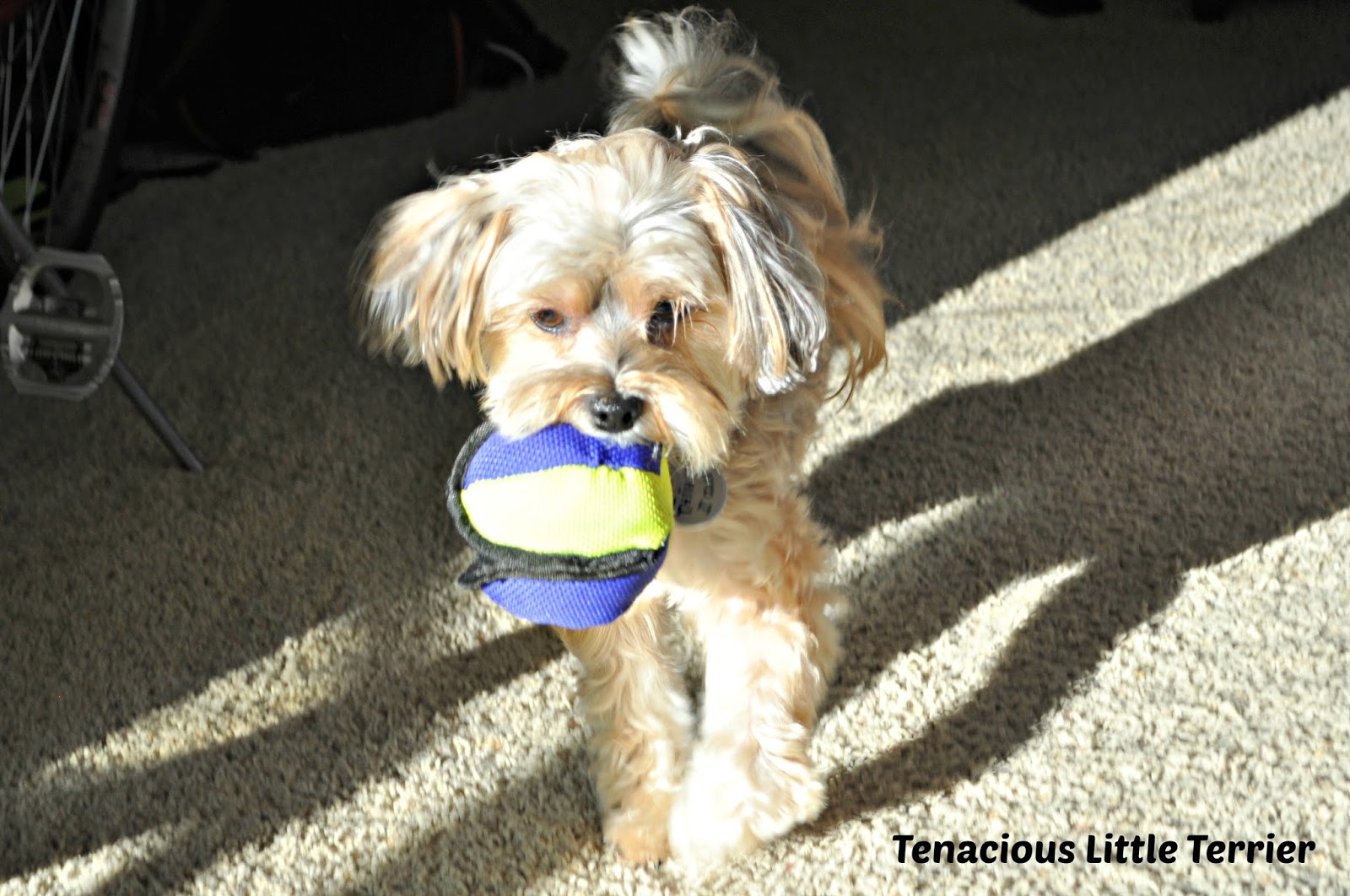
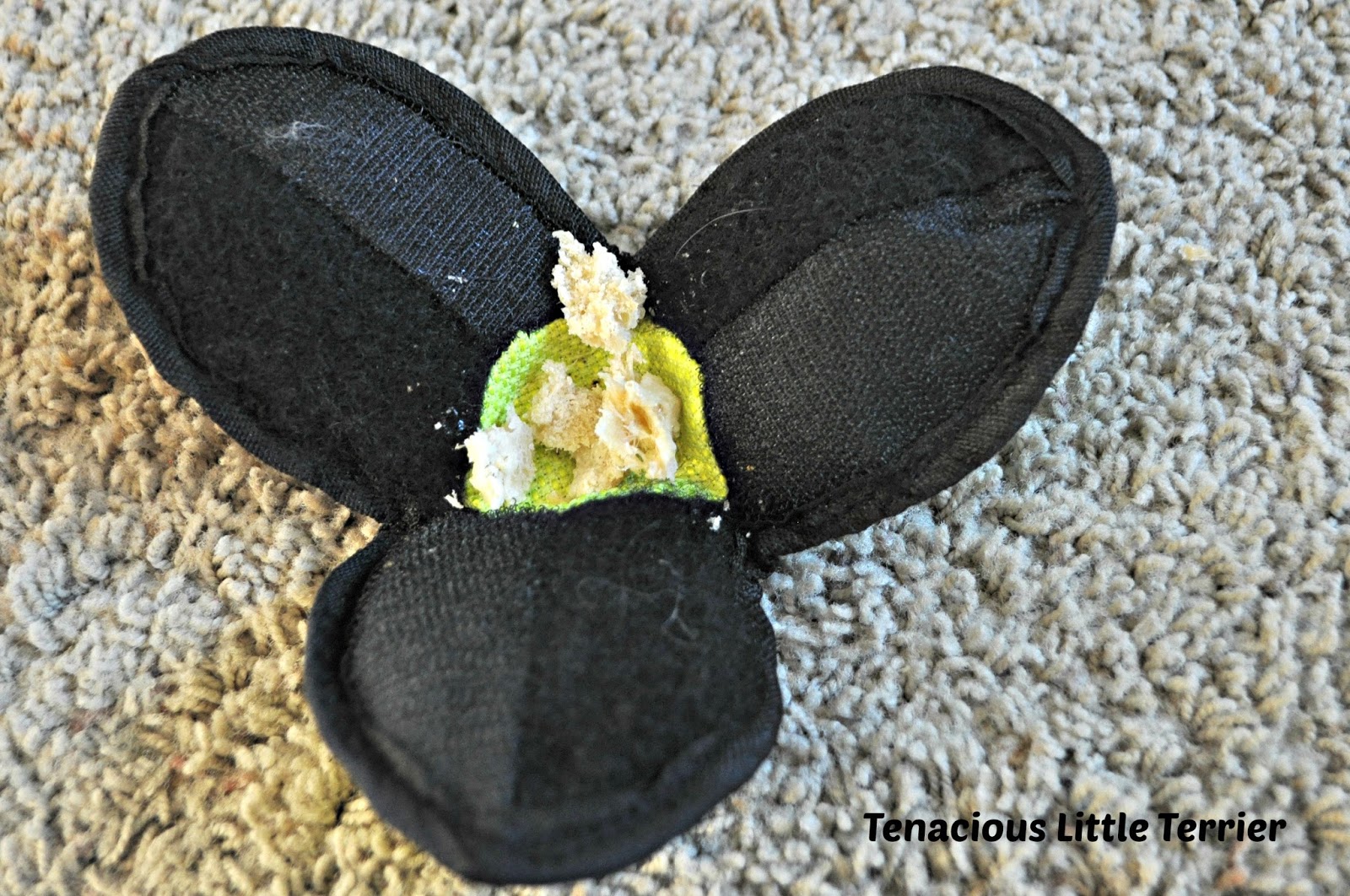
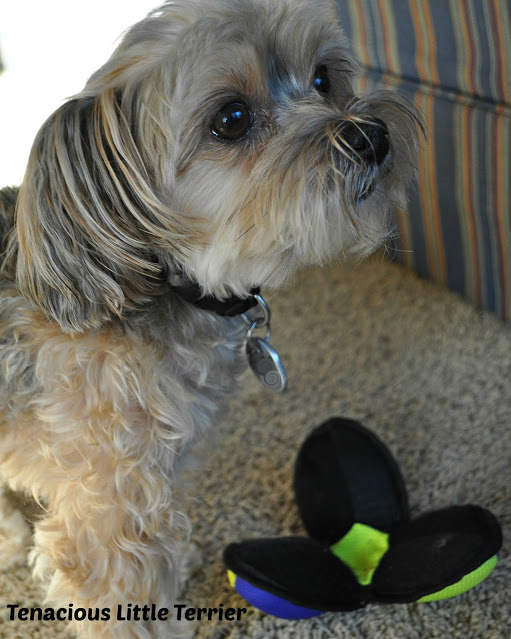
One of the latest additions to our training tool box is the Lotus Ball from Clean Run (they sell other food stuffable toys as well). It's a three part ball that is lined with velcro so you can stuff food inside it. Dogs can either rip it apart themselves which appeals to their hunting instincts or they can bring it to you to be opened which is the method that Mr. N prefers.


Mr. N has very little interest in balls but once he saw that the ball had food in it, he was much more willing to go chase after it and bring it back to be opened. He will retrieve but usually he finds it boring after a half-dozen throws. 


You can use the ball for distance training and treat the dog from a distance which is handy for things like agility training and teaching contacts. Right now, I'm mostly just using it to teach Mr. N that toys have value. Tasty value.


The Lotus Ball is an interactive toy which means it should only be played with under supervision. I don't think it would hold up to a lot of aggressive chewing.

All toys mentioned were purchased by myself.
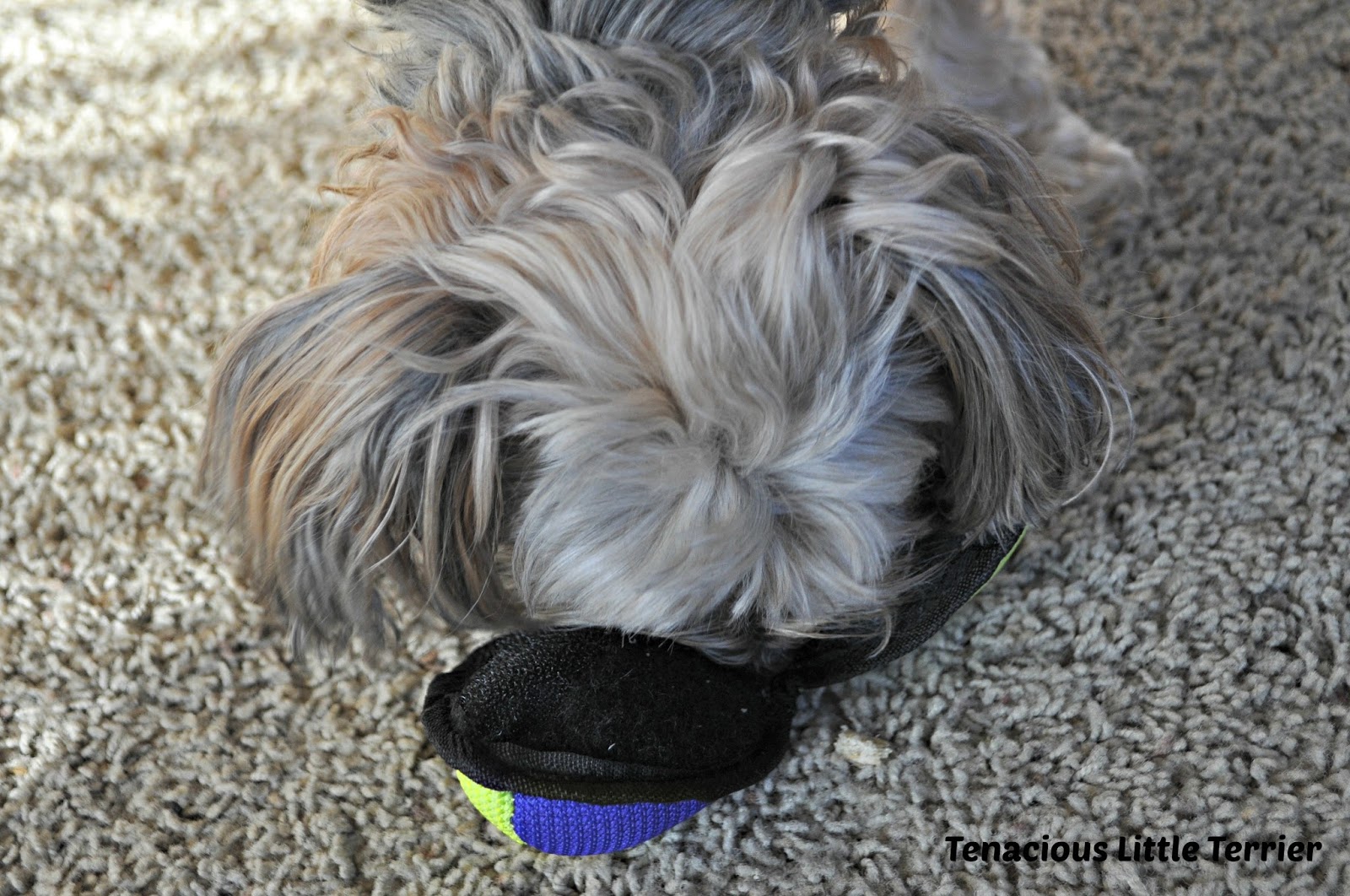
Mr. N is busy trying to figure out how to earn more food. Is your dog into toys? Would your dog like playing with a food stuffable toy? 

Welcome to First Monday's Positive Pet Training Blog Hop hosted by Cascadian Nomads, Tenacious Little Terrier and Rubicon Days. Please share your responsible pet owner positive pet training tips by linking a blog post or leaving a comment below.  Our theme for this month is play and trying out new training games.. but any positive reinforcement training posts or comments are also always welcome. The Positive Pet Training Blog Hop goes all week long. Our next hop will begin Monday, June 6th and continues for a week. The theme for June is reporting back on trying out new training games. 

08 April 2016

Appropriate and Good Play Dog Behavior

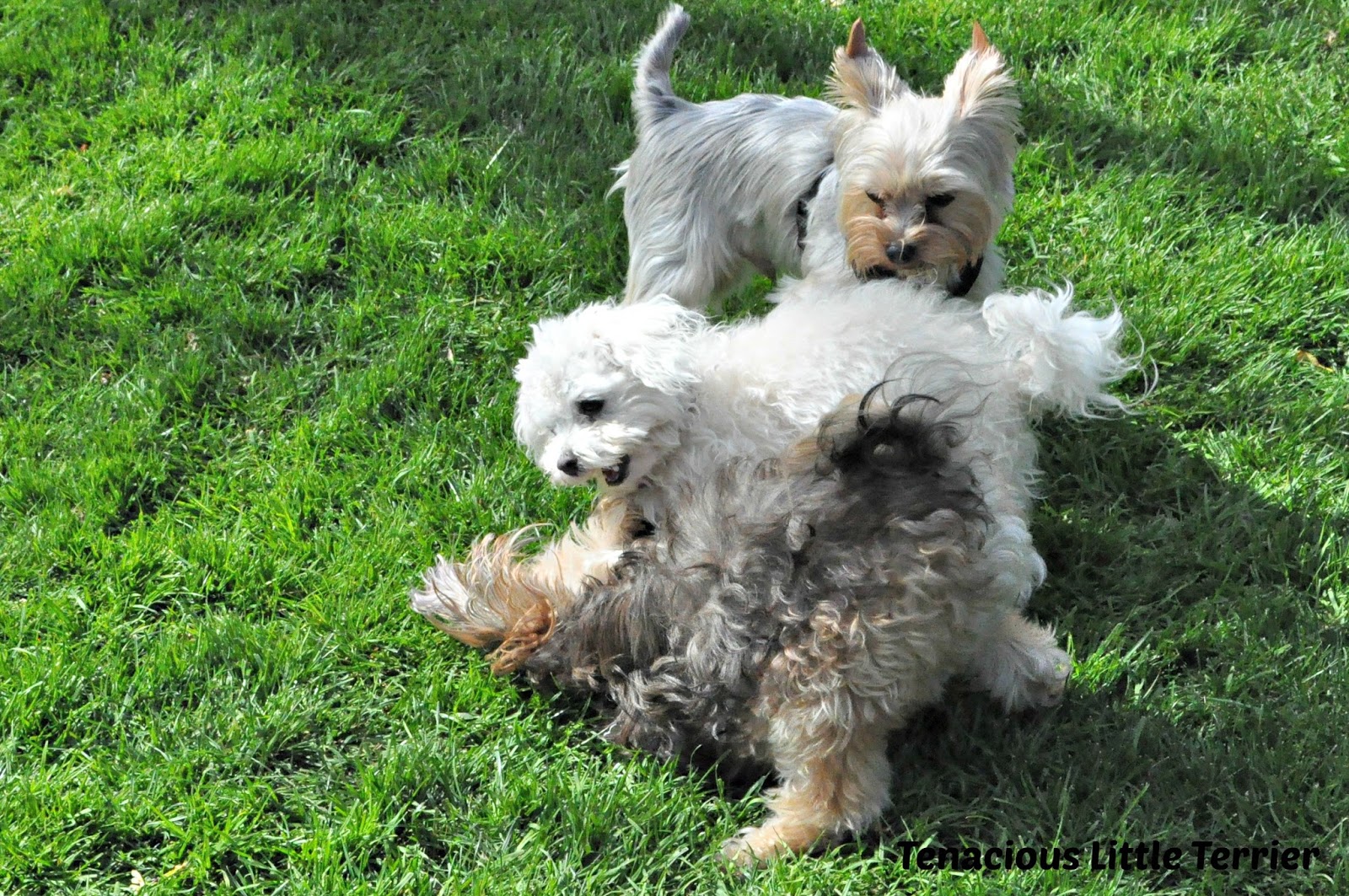
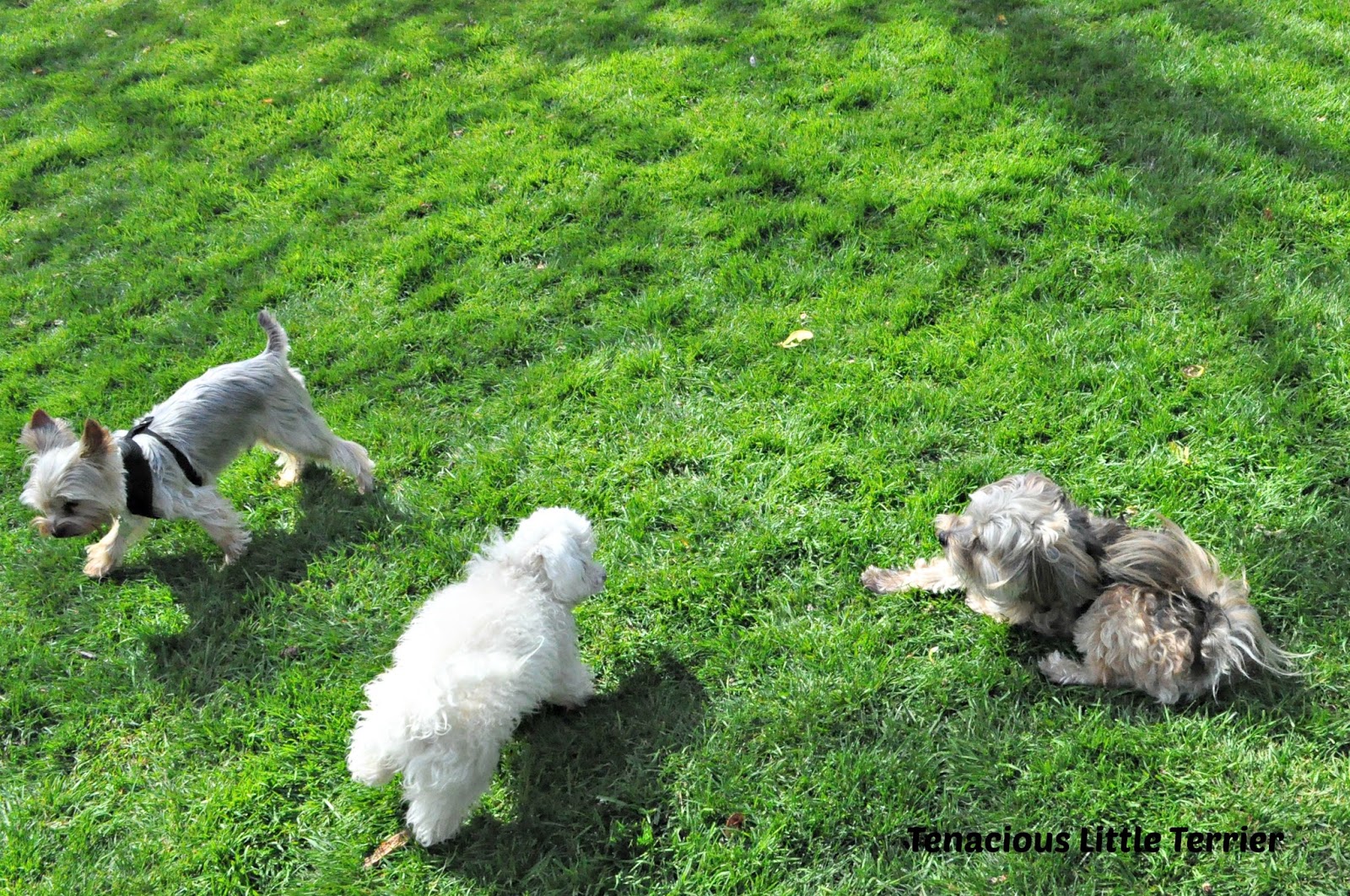
Much like toddlers, dogs left to their own devices can turn things into a Lord of the Flies situation. I always supervise play especially with strange dogs. Does your dog play nicely? Or are they a bully? Dogs that play appropriately will take turns, have relaxed body language, self-handicap if need be, take little breaks and engage in consensual play.  

Taking Turns

Are the dogs taking turns playing different roles? Are they switching between chasing and being chased and pouncing and being pounced upon? Is it a give and take situation?


Relaxed Body Language

Dogs who are playing appropriately have relaxed body language. Lots of light, bouncy movements and posture. Relaxed faces and ears. Play bows. Big open grins. Or in Mr. N's case, blowing a raspberry!


Self-handicapping

Healthy play requires the stronger/faster/bigger dog to deliberately match the level of play of their play partner and tone down their speed and strength. Mr. N has a couple of big dog friends who will go into a down position and wrestle with him that way while he scrambles over them and plays bitey face. As odd as it may seem for Mr. N to be the "big dog," he is slightly bigger and stronger than the puppies he is playing with and he will let them win wrestling bouts.


Mini-Breaks

Are the dogs regulating themselves by taking frequent little breaks in between play? If the dogs are getting too excited and not stopping, you might have to impose a play break.


More, More!

Probably one of the best ways to distinguish if your dog is being a bully or not is calling your dog to you and restraining them and watching their playmate's reaction. Are they following your dog and eager for more play? Or are they ignoring your dog or moving away? If the latter, time to call it quits. Mr. N has been trampled and rolled over and he will still dash back into the fray to play. 


Stop Play Now

If one of the dogs is trying to end play by running away, hiding behind objects or people, yelping, or snapping or otherwise showing discomfort, the dogs should be separated. Stiff body language, slower and tense body movements, growling and staring are also indicators that play should stop and an interruption is called for.

Does your dog exhibit appropriate play behavior? 

04 April 2016

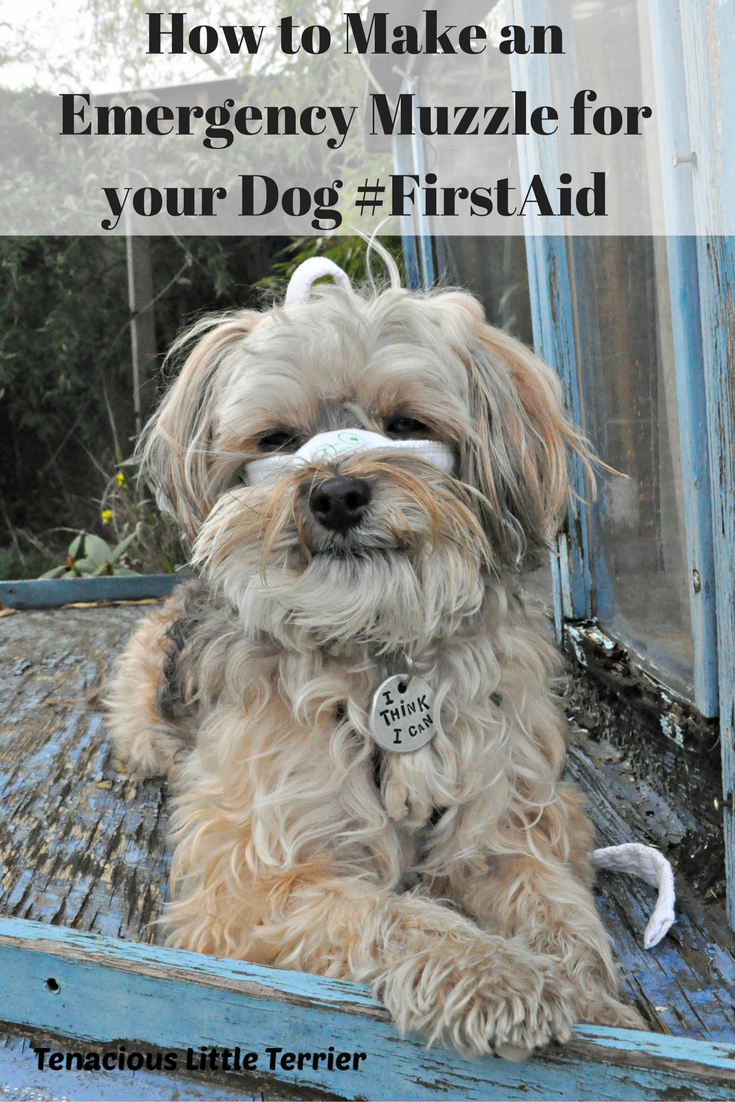
Making An Emergency Dog Muzzle and Putting It On #PetFirstAid

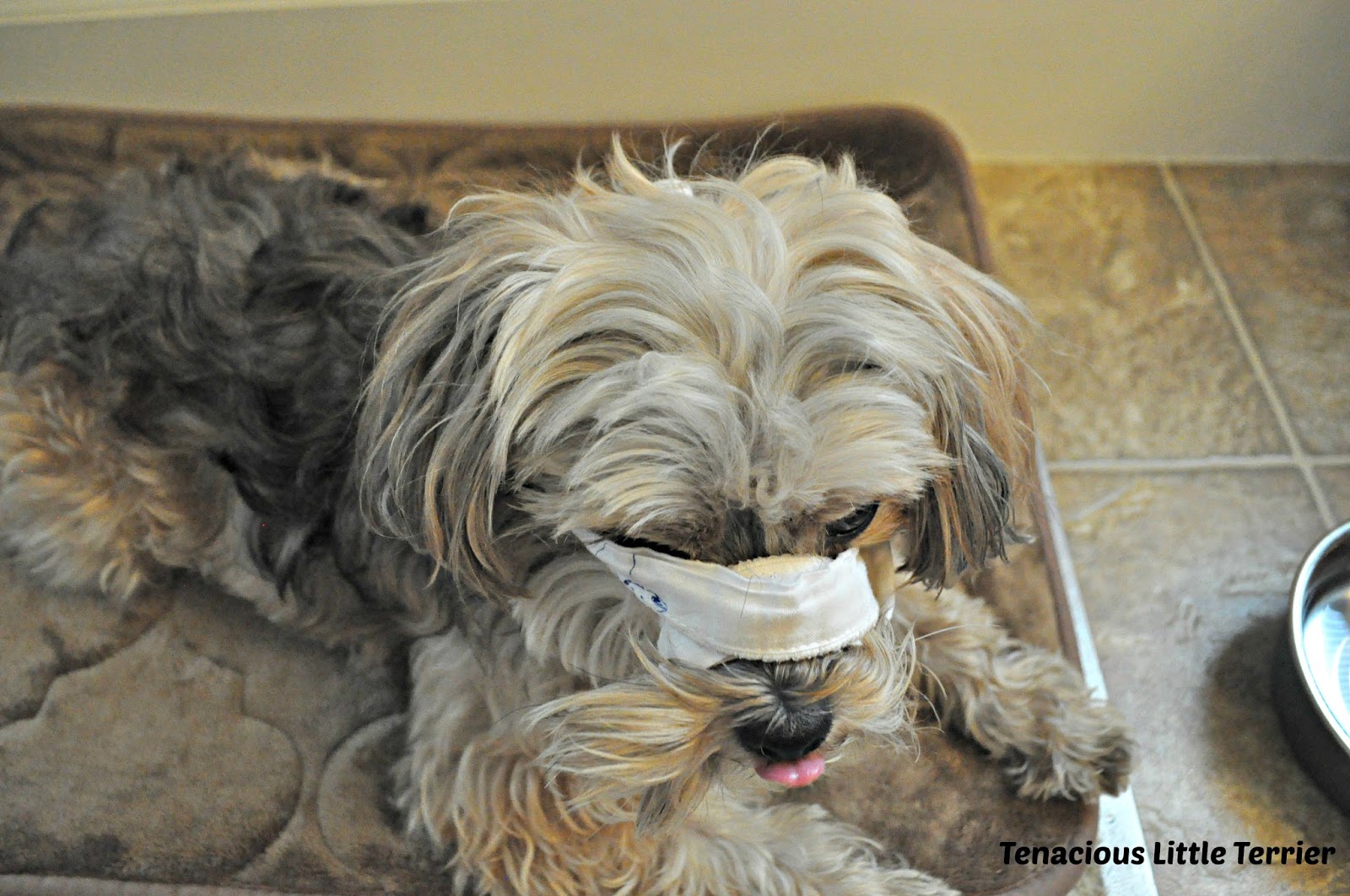
In case of emergency like a car accident, it's important to be able to muzzle your dog safely. Dogs in pain can lash out while you're trying to help them. You can make an emergency muzzle with a lot of different materials that you have around (gauze, shoelace, leash, rope, pantyhose etc). I used my bathrobe cord because it was handy and a good width for Mr. N's face.


Mr. N is super tolerant of handling and grooming, both with me and other people. And now that we've finally almost conquered nails, I can do all the basics at home with him. But if something happened (he's allergic to bee stings for example), I'd want him to not freak out further because I had to muzzle him just in case. So we practiced putting one on. He's used to a lot of poking and prodding and adjusting because he is a grooming intensive dog plus he wears a lot of clothes so the process went quicker. 


It took me a few tries to figure out how to best position the cord. Not a lot of facial surface to work with here. Once I figured out how to adjust the cord so it wasn't covering his eyes, he was comfortable wearing it for short periods. And rewarded with a copious amount of cheese. Before... well, you can judge for yourself how he felt. 

Practice before your dog is frantic and in pain and moving is key. If your dog needs more help acclimating to a muzzle or if you're interested in other muzzle choices, here are some good tips from Karen Pryor's site. Be sure not to leave your muzzled dog alone and remember that the emergency muzzle is a short-term measure. They're not meant to be left on for a long time.

These are the instructions from the Merck Vet Manual on how to tie the cord into a muzzle: 

"Tie a knot in the center of the bandage. Make another loose knot several inches above the first knot. Slip the loop over the dog's muzzle and gently pull the knot tight (Step 1). Cross the ends of the bandage under the dog's jaw (Step 2). Firmly tie the crossed ends behind the dog's neck (Step 3)."

The final product. Mr. N chilling on an old boat with his emergency muzzle on. Is your dog comfortable wearing a muzzle? 

Welcome to First Monday's Positive Pet Training Blog Hop hosted by Cascadian Nomads, Tenacious Little Terrier and Rubicon Days. Please share your responsible pet owner positive pet training tips by linking a blog post or leaving a comment below.  Our theme for this month is  training for safety and emergencies for National Pet First Aid Awareness Month. but any positive reinforcement training posts or comments are also always welcome. The Positive Pet Training Blog Hop goes all week long. Our next hop will begin Monday, May 2nd and continues for a week. The theme for May is play and trying out new training games.

07 March 2016

How to Positively Teach Your Dog a Reliable Recall. Are You More Interesting Than Dirt?


Are you more fun than dirt? Think of all the competing distractions for your dog's attention: food, people, other dogs, squirrels, all the good smells in the dirt. Can you compete with that for your dog's attention especially with they are off-leash and they don't have to listen to you when they don't want to?

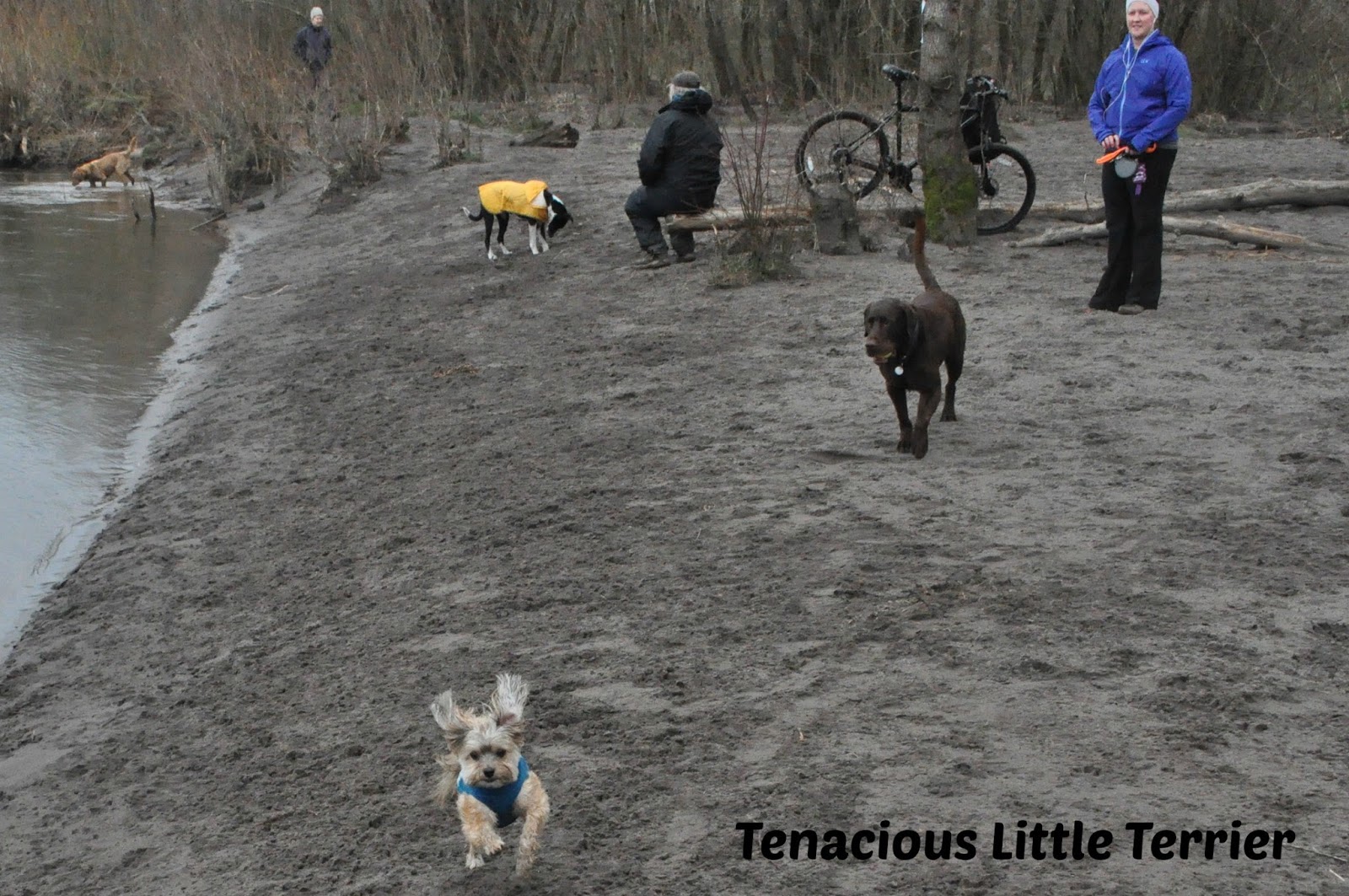
In the photo above, Mr. N is ignoring the other people and dogs and the Chuckit to come running back to me when I called him. He loves running after dogs who are chasing a Chuckit ball. We achieved this by:

1. Never using a recall for anything unpleasant. Nail trimming, baths, etc. Mr. N finds leaving the park really hard so instead of telling him to come, I will tell him to wait and catch up with him and put his leash on and treat.

2. Always, always rewarding check-ins. If your dog decides to pop in and check in with you, reward! You want them to think that coming to you is a good thing. Especially of their own volition

3. Practice makes perfect. We practice recall regularly at all levels (low to high distractions). Mr. N's favorite might be when I call him randomly across the house and share tidbits from cooking in exchange for him zooming over.

4. Punishment is not the answer for not listening. If Mr. N doesn't listen, the fun ends but I do not yell, scold or use any form of physical punishment. 

5. Don't call them if you think you won't come. Unless you're at least 90 percent sure they will come back, don't call your dog. You'll only weaken the cue. Mr. N's recall is good around just about everything else... but horses are a little iffy. If I see horses, I'll put him back on leash as a precaution. 

6. Your dog should think they hit the lottery for coming back. Lots of high value treats or whatever else they find intensely rewarding. Mr. N prefers "human food" in the form of meat and cheese. 

7. Work your way up from small distractions to big. Practice indoors first and then once they're reliable there, practice outdoors with a long line and add more distractions as they progress.

8. It's helpful working with another dog who has a reliable recall especially if the other dog is young and impressionable. I started teaching a friend's puppy how to come on cue by having Mr. N do it with him. 

9. Switch to a different cue if yours is tainted. If your dog is blowing you off the majority of the time with your current cue, start fresh with a new one and train from the beginning. I haven't actually switched cues but a friend has and Mr. N comes to her dog's new cue as well as his normal one. If I had to switch, I think I'd pick "zombies!"

10. Just say the cue once. Don't repeat yourself over and over. If I think the environment is particularly distracting, I'll say it while running in the opposite direction and making high-pitched noises and Mr. N will usually come chase me. 

What have you found effective in teaching a reliable recall? 


Welcome to First Monday's Positive Pet Training Blog Hop hosted by Cascadian Nomads, Tenacious Little Terrier and Rubicon Days. Please share your responsible pet owner positive pet training tips by linking a blog post or leaving a comment below.  Our theme for this month is recall but any positive reinforcement training posts or comments are also always welcome. The Positive Pet Training Blog Hop goes all week long. Our next hop will begin Monday, April 4th and continues for a week. The theme for April is training for safety and emergencies for National Pet First Aid Awareness Month.
My Five Favorite Positive Training Tools for Dogs

Tools are an essential part of life and dog training especially when your dog has figured out how to use items as tools. These are some of m...